
Your Gut is Hungry: The Power of Prebiotic Fruits
Did you know that your digestive tract is home to trillions of microscopic dinner guests? This bustling ecosystem, known as your gut microbiome, heavily influences your digestion, mood, and immune system. To keep these friendly bacteria happy, you need to feed them the right nutrients. Fortunately, incorporating natural prebiotic fruits into your daily diet is one of the easiest ways to fuel these beneficial microbes.
Many people confuse probiotics with prebiotics. While probiotics are live, beneficial bacteria found in fermented foods, prebiotics act as the non-digestible fiber that fuels them. Think of your gut like a garden; probiotics are the seeds, while prebiotics are the premium fertilizer. By eating specific fruits, you actively nourish your microbiome from the inside out.
[Placeholder for Image: Alt text containing the exact keyphrase: A vibrant bowl of natural prebiotic fruits like bananas and kiwi arranged on a kitchen table]
Understanding how these foods work can completely transform your wellness routine. When you eat fiber-rich fruits, your stomach cannot break down certain complex carbohydrates. Consequently, these fibers pass safely into your lower digestive tract. Once there, your gut microbes ferment them, creating compound fuel that supercharges your metabolic health. Let us dive into five science-backed fruits that will optimize your digestive system.
1. Bananas: The Ultimate Daily Gut Fueler
Bananas are perhaps the most famous natural prebiotic fruits available today. However, their stage of ripeness dictates exactly how much prebiotic power they deliver to your microbiome.
The Science of Resistant Starch
Slightly green bananas are packed with a special fiber called resistant starch. This specific carbohydrate resists standard digestion in the small intestine. Instead, it travels straight to the large intestine to feed healthy bacteria like Bifidobacteria.
As your gut bacteria ferment this resistant starch, they produce short-chain fatty acids (SCFAs), primarily butyrate. Butyrate acts as the primary energy source for the cells lining your colon. Therefore, snacking on a slightly underripe banana directly strengthens your gut barrier and reduces systemic inflammation.
Transitioning to Ripe Bananas
As bananas ripen, their starch transforms into simple sugars. Even so, fully ripe bananas still contain pectin, another valuable prebiotic fiber. Pectin helps regulate digestion and ensures a steady release of nutrients. For an extra digestive boost, you can read more about balancing your diet using our [Placeholder for Internal Link: comprehensive guide to fruit enzymes].
2. Kiwifruit: The Precision Microbiome Booster
If you want a vibrant tropical fruit that packs a massive punch for digestive health, look no further than the humble kiwi. This fuzzy powerhouse provides a unique dual-action benefit for your digestive system.
Enhancing Microbial Diversity
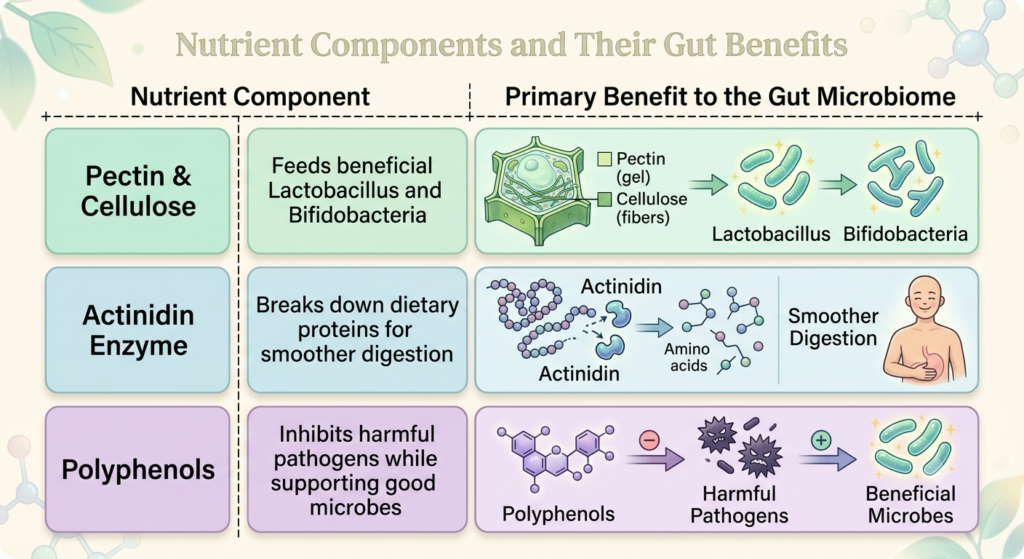
Clinical studies show that kiwifruit acts as an exceptional fuel source for your microbiome. The complex polysaccharides in kiwi selectively promote the growth of Lactobacillus and Bifidobacteria.
Furthermore, kiwifruit contains actinidin, a natural enzyme that assists in breaking down dietary proteins. Consequently, this fruit relieves upper GI discomfort while simultaneously nourishing your lower gut. Eating two kiwis a day can significantly improve your bowel regularity and microbial diversity.
3. Apples: Pectin Powerhouses for Cellular Repair
The old saying claims that an apple a day keeps the doctor away, and modern science fully agrees. Apples are fantastic natural prebiotic fruits that can dramatically alter your gut health for the better.
How Apple Pectin Works
Roughly 50% of an apple’s total fiber content comes from pectin. This soluble fiber forms a gel-like substance in your digestive tract, which slows down digestion and optimizes nutrient absorption. More importantly, your gut bacteria absolutely love to feast on apple pectin.
“During the fermentation process, apple pectin significantly increases the production of butyrate, which protects the mucosal lining of the intestines from harmful pathogens.”
Fighting Inflammation with Antioxidants
In addition to fiber, apples are loaded with polyphenols, which are plant-based antioxidant compounds. These polyphenols work synergistically with prebiotic fibers to reduce gut inflammation. Because your body cannot absorb most polyphenols in the small intestine, they travel down to the colon where your gut bacteria break them down into highly beneficial anti-inflammatory metabolites.
4. Watermelon: The Hydrating Prebiotic Hero
Watermelon is globally celebrated for its refreshing sweetness and high water content during hot summer days. Surprisingly, it also serves as an excellent, science-backed tool for your digestive microbiome.
The Role of Cucurbitacin and Lycopene
Watermelon contains a high concentration of prebiotic soluble fibers that nourish your beneficial gut microbes. It is also incredibly rich in lycopene, a powerful antioxidant that helps soothe irritated intestinal walls.
[Placeholder for Outbound Link: According to a landmark study on gut microbiota published by the National Center for Biotechnology Information (NCBI)], dietary prebiotics and antioxidants work together to prevent leaky gut syndrome.
Maximizing Hydration and Motility
Because watermelon consists of over 90% water, it ensures that prebiotic fiber moves smoothly through your digestive tract. Proper hydration is critical for fiber to do its job effectively. Without enough water, high fiber intake can occasionally lead to mild bloating. Fortunately, watermelon naturally solves this problem by delivering fiber and hydration in one delicious package.
5. Grapefruit: Citrus Support for Metabolic Balance
Grapefruit is a tangy addition to our list of natural prebiotic fruits. While many people enjoy it for weight management, its structural fibers offer profound support for the microflora living inside your digestive tract.
Breaking Down Naringin and Soluble Fiber
Grapefruit contains a unique flavonoid called naringin, which gives the fruit its characteristic bitter taste. Naringin possesses strong antimicrobial and anti-inflammatory properties that help eliminate harmful bacteria while leaving beneficial bacteria unharmed.
Supporting Your Metabolic Pathways
- Feeds Roseburia Bacteria: The specific fibers in grapefruit help increase populations of Roseburia, a bacterial genus linked to lean metabolic profiles.
- Regulates Blood Sugar: Prebiotics in citrus fruits modulate glucose absorption, preventing drastic insulin spikes after meals.
- Strengthens Colon Health: Regular consumption ensures a steady supply of fuel for your lower colon cells.
If you enjoy citrus fruits but want to see how they compare to other categories, check out our [Placeholder for Internal Link: ultimate index of medicinal super-fruits] to expand your nutritional knowledge.
How to Easily Add Prebiotic Fruits to Your Daily Routine
Transitioning to a gut-healthy diet does not require a complete lifestyle overhaul. In fact, making small, deliberate changes to your breakfast or snacks will yield massive long-term benefits for your microbiome.
For instance, you can slice a slightly green banana directly onto your morning oatmeal. The combination of oat beta-glucans and banana starches creates a powerful prebiotic synergy. Alternatively, consider blending kiwi and watermelon into a refreshing afternoon smoothie to hydrate and feed your gut bacteria simultaneously.
However, you should remember to introduce these fiber-rich fruits gradually if your current diet is relatively low in fiber. Your gut microbiome needs a few days to adjust to its increased workload. If you increase your fiber intake too rapidly, you might experience temporary gas or bloating as your bacteria adjust to their new abundance of food.
Final Thoughts: Nurture Your Inner Ecosystem
Optimizing your digestive health does not require synthetic supplements or restrictive detox diets. By intentionally consuming natural prebiotic fruits like bananas, kiwis, apples, watermelons, and grapefruits, you take active control of your wellness. These fruits deliver the perfect blend of soluble fibers, life-giving water, and potent antioxidants to help your friendly bacteria thrive. Start feeding your microbiome today, and your gut will surely thank you tomorrow!