
The Ultimate Sweetness Showdown: Nature vs. The Lab
Have you ever wondered why health experts tell you to avoid sugary soda while simultaneously encouraging you to eat fresh berries? After all, both items contain simple sugars that look remarkably similar under a microscope. However, your body processes these two treats in completely different ways. Understanding why fruit sugar does not cause weight gain like refined sugar can completely revolutionize your approach to weight management and metabolic health.
Many people mistakenly vilify all carbohydrates when they start a weight-loss journey. Consequently, they miss out on the incredible medicinal benefits of fresh produce. The key difference lies not just in the sugar molecules themselves, but in the biological package that accompanies them. Let us unpack the fascinating metabolic science that explains why whole fruits support a lean waistline while processed sweets do the exact opposite.
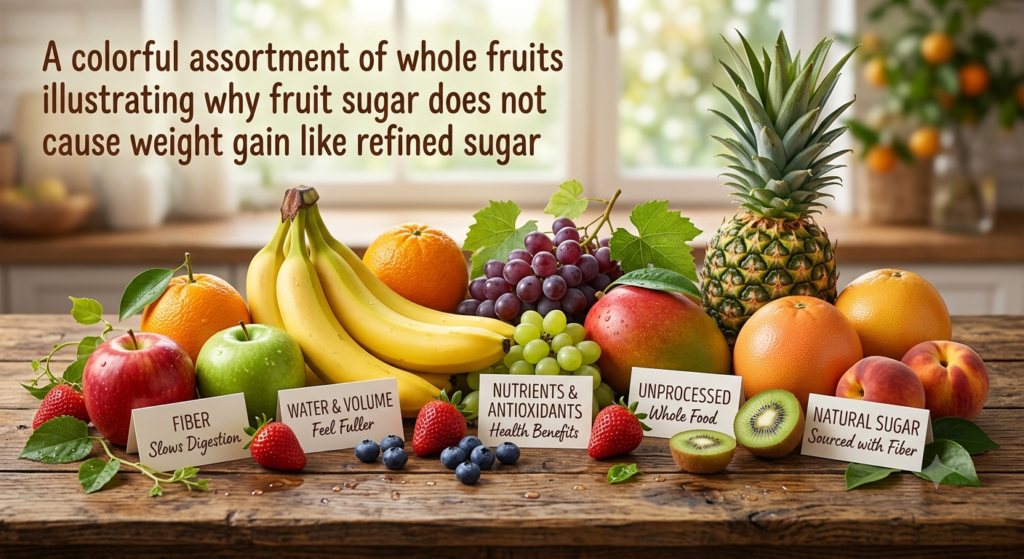
Analyzing how your digestive tract functions reveals why whole food sources are vastly superior. When you consume processed foods, your system absorbs the simple sugars almost instantly. In contrast, nature packages its sweetness with structural elements that slow down your digestive timeline. This structural barrier transforms how your liver and pancreas respond to sweetness, protecting your body from fat storage.
The Biological Packaging: Fiber Changes Everything
The primary reason why fruit sugar does not cause weight gain comes down to a single, miraculous component: dietary fiber. Whole fruits are not just bags of sugar water; they are intricate cellular matrices.
The Speed of Absorption
When you drink a glass of soda, the refined sugar enters your bloodstream within minutes. This rapid influx forces your pancreas to release a massive wave of insulin to clear the glucose. Because high insulin levels signal your body to store fat, this process directly contributes to weight gain.
Conversely, the soluble and insoluble fiber in fresh fruit forms a gel-like barrier in your small intestine. Consequently, your body breaks down and absorbs the natural sugars at a slow, controlled pace. This steady release prevents the dramatic insulin spikes that lead to fat accumulation and subsequent energy crashes.
The Satiety Factor
- Refined Sugar Deception: Processed sweets lack fiber, meaning they do not trigger your body’s satiety hormones. Therefore, you can consume hundreds of calories without feeling full.
- Fruit Fullness: The high water and fiber content in fruits physically stretches your stomach wall. This stretching alerts your brain to release leptin, the hormone that tells you to stop eating.
Fructose Metabolism: The Liver’s Golden Rule
To fully grasp the biochemistry of sweetness, we must look at how your liver processes different types of sugars. Refined table sugar consists of sucrose, which is a exact 50/50 blend of glucose and fructose.
The Danger of Fructose Overload
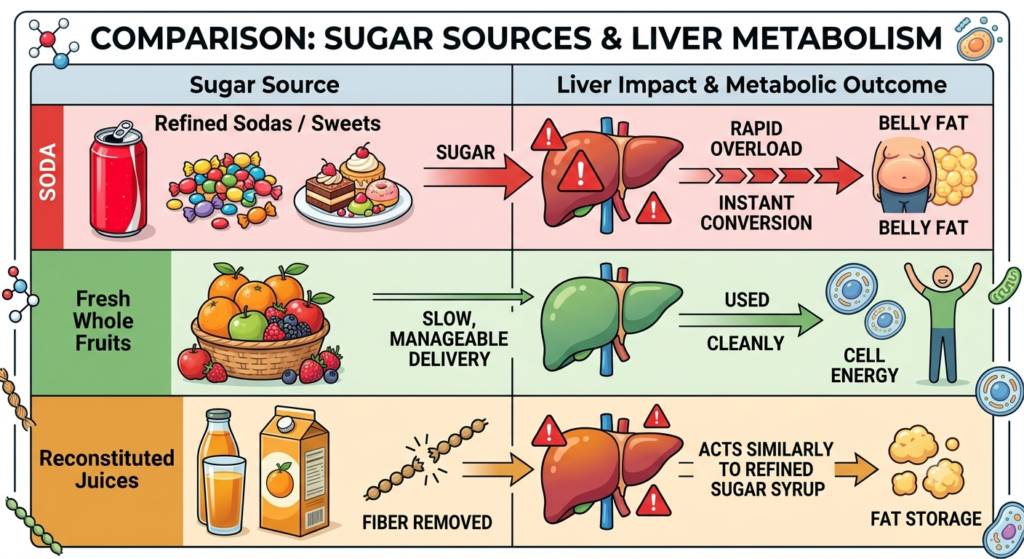
Your liver is the only organ capable of metabolizing fructose molecules. When you consume refined high-fructose corn syrup, a massive tidal wave of sugar hits your liver all at once. Because the liver cannot process this overwhelming volume, it converts the excess sugar directly into triglycerides through a process called de novo lipogenesis. These fats are then stored in your liver or around your abdomen.
The Slow Fruit Delivery
So, why does the fructose in a whole apple not cause the same damage? The answer lies in the delivery rate. Because you have to chew the fruit, and because the fiber slows down digestion, your liver receives the fructose in a slow, steady trickle.
Your liver can easily process this small, manageable amount of fuel without triggering fat storage pathways. This cellular efficiency explains why fruit sugar does not cause weight gain even when enjoyed daily. For a deeper look at how fruit structures alter your internal biology, check out our [Placeholder for Internal Link: comprehensive guide to natural prebiotic fruits].
Micronutrients and Antioxidants: Cellular Helpers
Refined sugar provides what nutritionists call “empty calories.” This term means the food delivers energy without any accompanying vitamins, minerals, or beneficial plant compounds.
Mitigating Oxidative Stress
Whole fruits are absolutely packed with vitamins, minerals, and potent polyphenols. These antioxidants neutralize free radicals and actively combat cellular inflammation. Interestingly, systemic inflammation is a major driver of insulin resistance and obesity. By reduction of this internal inflammation, the nutrients in fruit actually help optimize your metabolic rate.
“Studies demonstrate that the polyphenols found in deeply colored fruits can inhibit the enzymes responsible for carbohydrate digestion, further smoothing out blood sugar levels.”
[Placeholder for Outbound Link: According to a landmark nutritional review published by the National Center for Biotechnology Information (NCBI)], regular consumption of whole fruits is consistently associated with a lower risk of obesity and type 2 diabetes. The micronutrients inside the fruit work synergistically to support cellular health, making it impossible to compare fruit to refined candy.
The Hidden Trap: Whole Fruit vs. Fruit Juice
While fresh fruit is an excellent ally for a lean body, processed variations can easily sabotage your health goals. It is vital to understand where to draw the line in the grocery aisle.
The Problem with Juicing
When you put fruit through a commercial juicing machine, you completely strip away its insoluble fiber matrix. Essentially, you take away the exact mechanism that explains why fruit sugar does not cause weight gain in the first place. Drinking a large glass of apple juice delivers a heavy dose of liquid fructose straight to your liver, mimicking the metabolic effects of a soft drink.
Choosing Wisely
To keep your metabolism firing beautifully, always prioritize eating your fruits whole or blending them into thick smoothies. Blending retains the beneficial fiber, keeping the structural matrix intact. If you want to explore how specific fruit enzymes can further boost your digestive efficiency, review our [Placeholder for Internal Link: guide to the bromelain enzyme in pineapple].
How to Strategy-Map Your Fruit Intake for Weight Loss
Incorporating fruit into a fat-loss plan is incredibly simple when you follow a few basic guidelines. By selecting the right varieties, you can satisfy your sweet tooth while actively burning fat.
- Prioritize Low-Glycemic Choices: Berries, green apples, and citrus fruits offer high fiber alongside lower sugar concentrations, making them ideal for weight management.
- Watch the Timing: Enjoying fruit before a workout provides your muscles with clean glycogen fuel without spiking storage hormones.
- Pair with Healthy Fats: Eating your fruit with a handful of almonds or a dollop of Greek yogurt slows down digestion even further for maximum satiety.
Read our more content
Pectin Fiber in Green Apples: 6 Science Benefits for Your Waistline
Why does fruit sugar not cause weight gain like refined sugar?
Conclusion: Embrace Nature’s Sweetness Confidently
You never need to fear the natural sweetness found in a fresh orchard. Refined sugar triggers weight gain because it floods your bloodstream, strains your liver, and lacks nutritional value. In contrast, why fruit sugar does not cause weight gain comes down to nature’s perfect design. The fiber, water, and rich antioxidants inside whole fruits protect your metabolism and keep you feeling full. So go ahead and ditch the processed treats, reach for a vibrant piece of fruit, and let nature fuel your weight-loss journey!