
Are you downing giant glasses of store-bought juice every single morning to keep seasonal colds at bay? Many people automatically reach for vibrant citrus fruits whenever they feel a sudden case of the sniffles coming on. However, have you ever paused to consider the precise mathematical and biological equation behind this classic health habit? Knowing exactly how many oranges do you need to eat for your daily Vitamin C allows you to optimize your immune system without accidentally consuming an excess of natural fruit sugars.
Most health enthusiasts assume that hitting their basic nutritional baselines requires consuming massive mounds of fresh produce every single day. Fortunately, the actual science reveals a much more manageable reality for your daily meal planning. By understanding your body’s absorption limits, you can use whole citrus fruits as a highly efficient, medicine-like tool for your wellness. Let’s break down the cellular data to find your perfect daily intake.
The Daily Target: What Does Your Body Actually Require?
To figure out your daily fruit intake, you must first understand the official medical recommendations. Health authorities use a specific metric called the Recommended Dietary Allowance (RDA) to guide your daily nutrition.
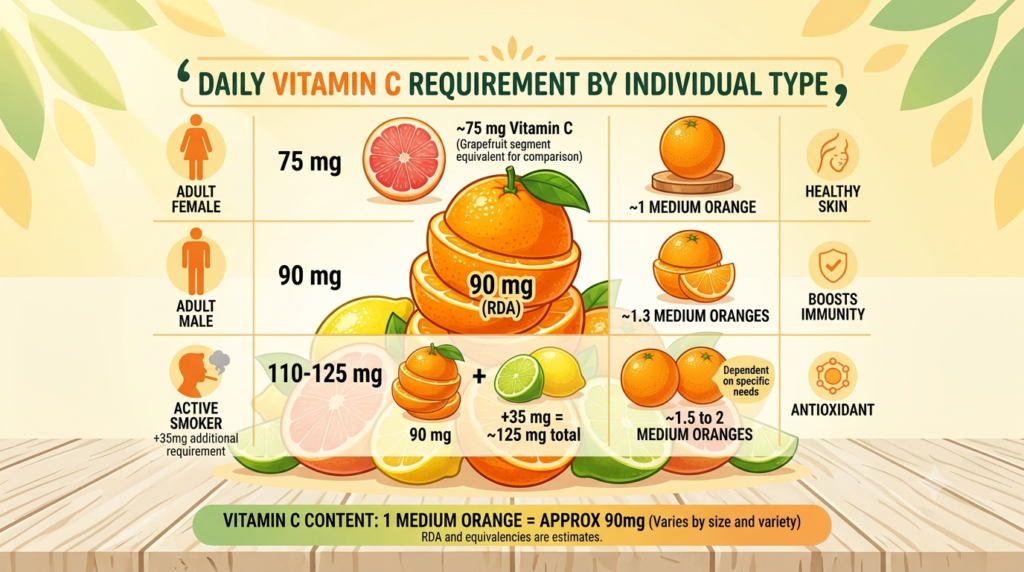
The standard RDA for ascorbic acid—the scientific name for vitamin C—varies slightly depending on your gender, age, and daily lifestyle habits. For instance, adult men generally require 90 milligrams per day to maintain healthy tissue function and cellular repair. Meanwhile, adult women need roughly 75 milligrams daily to keep their immune systems running smoothly.
Factors That Increase Your Daily Needs
Certain life circumstances significantly alter your body’s daily biological demand for antioxidants. If you fall into any of these specific categories, your cellular baseline shifts upward.
- Chronic Smokers: Nicotine rapidly depletes your body’s antioxidant stores, requiring an extra 35 milligrams of ascorbic acid daily.
- High Stress Levels: Chronic emotional or physical stress accelerates the depletion of ascorbic acid within your adrenal glands.
- Immune Challenges: Your white blood cells consume massive amounts of nutrients when actively fighting off environmental pathogens.
[Placeholder for Internal Link: Discover how fruit antioxidants protect cells from oxidative stress]
Crunching the Numbers: The Vitamin C Content of an Orange
Now that we know the targets, let’s look closely at the fruit itself. The amount of nutrients inside a single orange depends entirely on its physical size and its specific agricultural variety.
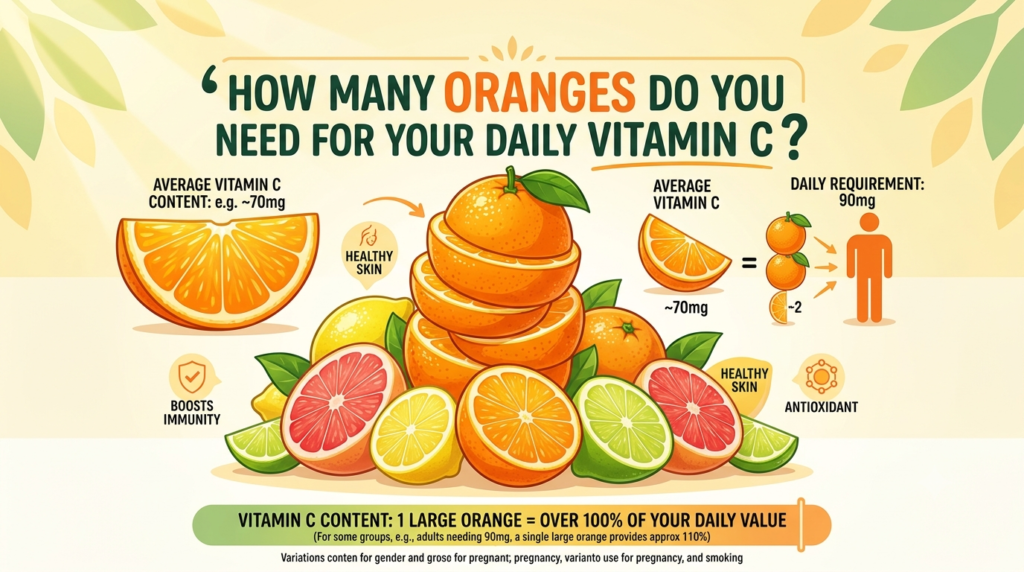
On average, a standard, medium-sized Navel orange contains approximately 70 milligrams of pure, bioavailable vitamin C. Consequently, if you are a woman looking to hit your basic RDA of 75 milligrams, eating just one large orange will completely satisfy your daily requirements. For men needing 90 milligrams, consuming one medium fruit gets you exceptionally close, leaving a tiny gap that is easily filled by other everyday dietary greens.
The Answer to the Golden Question
Therefore, when answering exactly how many oranges do you need to eat for your daily Vitamin C, the scientific consensus is incredibly straightforward. Eating one to two oranges per day easily covers the nutritional needs of almost any healthy adult. This modest amount keeps your tissues saturated with vital antioxidants without overwhelming your digestive system.
The Biological Power of Whole Fruit Matrixes
Why should you choose to eat a whole orange instead of simply swallowing a synthetic white vitamin pill? The biological answer lies in an advanced concept known as food synergy.
The Secret Weapon: Bioflavonoids
Whole citrus fruits do not just contain isolated ascorbic acid molecules. Instead, nature intelligently packages them alongside powerful plant compounds called bioflavonoids, such as hesperidin and naringenin.
Medical researchers have proven that these unique bioflavonoids significantly enhance the absorption rate of vitamin C inside your small intestine. Furthermore, they protect the volatile vitamin molecules from breaking down prematurely, ensuring your cells harvest the maximum possible benefit.
White Pith Matters
Many people carefully peel away every single strand of the stringy, bitter white substance coating the orange flesh. However, this material, known scientifically as the albedo or pith, contains incredibly high concentrations of fiber and flavonoids. Leaving a bit of this white pith intact while eating helps stabilize your blood sugar levels and actively supports your vascular health.
[Placeholder for Outbound Link: Read the National Institutes of Health (NIH) fact sheet on Vitamin C absorption and bioavailability]
Beyond Immunity: What Vitamin C Does for Your Body
While this vital micronutrient is famous for defending against seasonal bugs, it performs several other critical tasks inside your body.
1. Iron Absorption Catalyst
If you follow a plant-based or vegetarian diet, you might struggle to absorb enough iron from your meals. Plant iron, known as non-heme iron, has a notoriously low bioavailability rate within the human gut.
Fortunately, eating an orange alongside your iron-rich meals completely changes this dynamic. Vitamin C chemically bonds with iron in your stomach, transforming it into a much more soluble form that your intestines can easily absorb.
2. Natural Collagen Production
Your body cannot synthesize strong structural collagen fibers without a steady supply of ascorbic acid. The nutrient acts as an essential cofactor for the enzymes responsible for cross-linking skin tissue. Therefore, knowing how many oranges do you need to eat for your daily Vitamin C doubles as a highly effective, natural strategy for maintaining youthful skin elasticity and reducing wrinkles.
Comparing Oranges to Other Vitamin C Powerhouses
While oranges are the global poster child for ascorbic acid, they are certainly not the only options in the orchard. In fact, several fruits outperform oranges on a per-gram basis.
The Exotic Contenders
If you ever want to diversify your fruit bowl, look to tropical climates. For instance, a single kiwi fruit delivers roughly 90 milligrams of vitamin C, hitting the male RDA in one small package.
Furthermore, a half-cup of sweet yellow bell peppers or a single guava fruit completely demolishes citrus totals by offering over 150 milligrams. However, oranges remain the most accessible, affordable, and consistently delicious option for the average consumer.
- Kiwi Fruit: Provides roughly 90 mg per fruit, offering superb digestive enzymes along with antioxidants.
- Strawberries: A single cup of these red gems serves up nearly 85 mg of sugar-conscious ascorbic acid.
- Papaya: This tropical favorite offers around 88 mg per small fruit, aiding both skin health and digestion.
Can You Eat Too Many Oranges?
Because vitamin C is a water-soluble molecule, your body does not store it long-term like fat-soluble vitamins. Instead, your kidneys efficiently filter out any excess amounts and excrete them through your urine.
However, consuming an extreme excess of oranges can still trigger mild, temporary health issues. For instance, eating six or seven oranges in a single afternoon introduces a massive wave of citric acid and dietary fiber to your gut. Consequently, this sudden overload can cause temporary digestive issues like abdominal cramps, heartburn, or loose stools.
The Upper Tolerable Limit
Medical professionals have established an official upper limit of 2,000 milligrams of vitamin C per day for adults. To reach this extreme threshold through citrus alone, you would need to devour nearly 28 whole oranges in a single day. Therefore, enjoying two or three fruits daily keeps you completely safe from toxicity while maintaining peak cellular health.
Practical Ways to Keep Your Citrus Fresh and Potent
To maximize your nutrient intake, you must store and consume your fruit correctly. Ascorbic acid is a delicate molecule that degrades when exposed to heat, air, and light over extended periods.
Storage Guidelines for Maximum Nutrition
Keep your fresh oranges in a cool, dark place or inside your refrigerator crisper drawer to halt nutrient degradation. Whole oranges can last up to three to four weeks when properly chilled.
- Eat Immediately: Once you peel or slice an orange, consume it promptly before oxygen begins oxidizing the vitamin C.
- Avoid High Heat: Never cook or bake your oranges if your primary goal is sourcing antioxidants, as heat rapidly destroys ascorbic acid.
- Zest Your Fruits: Use the outer orange peel zest in salads to capture extra aromatic bioflavonoids.
Conclusion
Ultimately, meeting your daily nutritional goals does not require complex meal prep, synthetic pills, or expensive chemical supplements. The answer to how many oranges do you need to eat for your daily Vitamin C is beautifully simple: just one to two fresh, whole fruits daily will perfectly fuel your immune defenses, brighten your skin complexion, and enhance your everyday vitality. Embrace this vibrant, whole food as a foundational part of your clean eating lifestyle, and let nature provide the perfect cellular fuel your body needs to thrive.