
Are you looking for a delicious, science-backed way to protect your heart health? Look no further than the creamy, green alligator pear. Many health enthusiasts praise this unique fruit for its rich supply of healthy fats, but its true cardiovascular superpower lies elsewhere. Specifically, the high amount of potassium in avocados helps lower blood pressure naturally by restoring balance to your delicate vascular system.
Eating this nutrient-dense fruit does far more than just satisfy your gourmet taste buds. In fact, adding it to your daily routine can significantly reduce the physical strain placed on your arterial walls. Let’s dive deep into the fascinating nutritional science to see exactly how this remarkable fruit protects your long-term heart health.
[Placeholder for Image: A sliced fresh avocado displaying the rich green pulp, emphasizing how the potassium in avocados helps lower blood pressure naturally]
The Modern Diet Dilemma: Sodium vs. Potassium
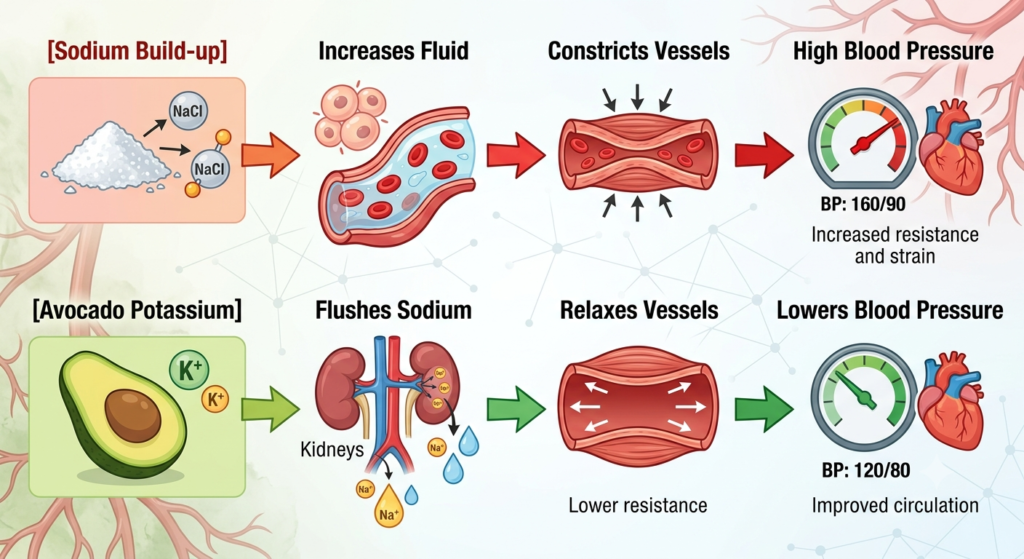
Modern processed diets frequently contain excessive amounts of hidden sodium. Consequently, this systemic mineral imbalance causes your body to retain extra water, which dramatically increases the fluid pressure inside your delicate blood vessels. Over time, this chronic tension damages your arterial lining and forces your heart muscle to work much harder.
Your body requires a precise, delicate mineral balance to maintain healthy everyday circulation. While sodium pulls water directly into your bloodstream, potassium acts as the ultimate natural counterweight. Therefore, consuming foods rich in potassium helps your kidneys flush out excess fluid, directly easing the workload on your cardiovascular system.
Why Avocados Rule the Mineral Kingdom
When people think of dietary potassium, they usually picture tropical bananas. However, avocados actually outperform bananas by a surprisingly wide margin.
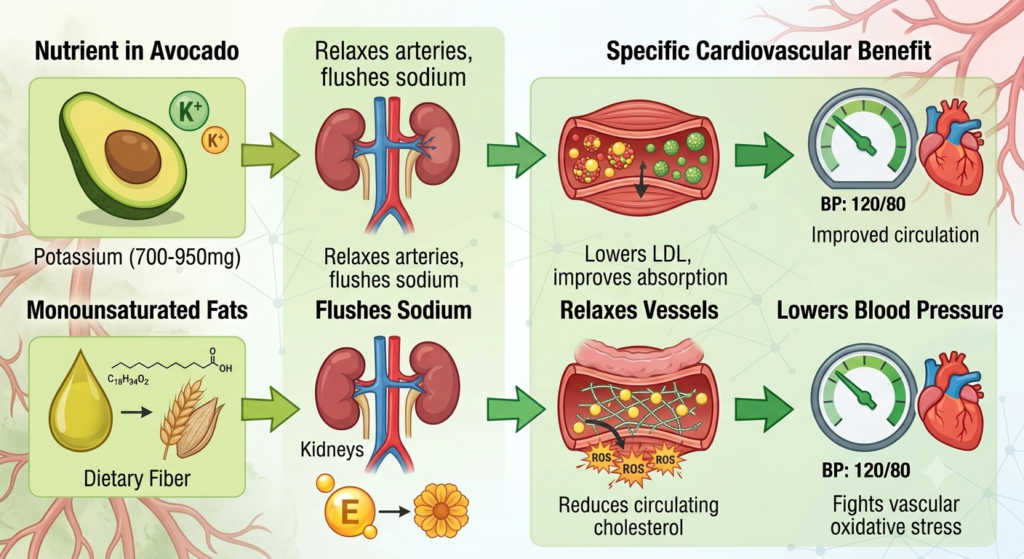
- Higher Yield: A single standard Hass avocado provides roughly 700 to 950 milligrams of vital potassium.
- Banana Comparison: This impressive amount easily beats a medium banana, which only offers about 420 milligrams.
- Nutrient Density: You get more blood-pressure-lowering power per bite, along with fewer simple sugars and a lower glycemic load.
[Placeholder for Internal Link: Discover other high-potassium fruits for optimal heart health]
The Deep Science: How the Potassium in Avocados Helps Lower Blood Pressure Naturally
So, what exactly happens inside your complex cardiovascular system when you eat an avocado? The underlying biological mechanism is both fascinating and highly efficient.
1. Easing Vascular Tension via Endothelial Relaxation
First, potassium functions as a powerful, natural vasodilator within your body. This means it directly signals the smooth muscle cells lining your arterial walls to relax and expand. When these walls relax, your blood vessels widen, allowing blood to flow much more freely throughout your limbs. As a dynamic result, both your systolic and diastolic numbers naturally begin to drop.
2. Eliminating Excess Sodium Through Kidneys
Second, the potassium in avocados helps lower blood pressure naturally by regulating renal filtration. High systemic potassium levels prompt your kidneys to excrete more sodium through your urine. According to major clinical studies, increasing your dietary potassium intake perfectly mimics the effects of mild, natural diuretic therapies without any of the unwanted pharmaceutical side effects.
[Placeholder for Outbound Link: Read the American Heart Association study on potassium and blood pressure management]
The Synergistic Power of Monounsaturated Fatty Acids
Potassium does not work entirely alone within this green superfood. Avocados also come packed with monounsaturated fatty acids (MUFAs), primarily a healthy compound known as oleic acid.
These healthy lipids actually help your digestive tract absorb fat-soluble vitamins and antioxidants much more effectively. Furthermore, these unique fats help reduce harmful LDL cholesterol while maintaining your beneficial HDL cholesterol levels. Together, this rich fat content and the potassium in avocados helps lower blood pressure naturally while actively cleaning out your delicate arteries.
[Placeholder for Internal Link: The ultimate guide to monounsaturated fats in fruits]
Antioxidant Protection for Your Vascular Lining
In addition to minerals and healthy fats, avocados contain powerful antioxidants like lutein, zeaxanthin, and vitamin E. These organic compounds actively combat oxidative stress throughout your bloodstream, which prevents chronic inflammation within your delicate blood vessels. Reduced systemic inflammation ensures that your relaxed arteries remain highly flexible and resilient over time.
The Critical Role of Dietary Fiber in Circulation
Many people overlook the incredible fiber content found within a single fresh avocado. In fact, one medium-sized fruit contains up to 10 grams of dietary fiber, featuring a healthy mix of both soluble and insoluble types.
Soluble fiber binds to bile acids in your digestive system, which prompts your liver to pull cholesterol out of your bloodstream to make more bile. This process lowers circulating cholesterol, preventing plaque accumulation. When you combine clean, open arteries with the vasodilation properties of potassium, your heart experiences a massive reduction in workload.
Understanding the Potassium-to-Sodium Ratio
Cardiovascular research increasingly emphasizes the vital importance of the potassium-to-sodium ratio in human nutrition. Historically, human ancestors consumed vastly more potassium than sodium. Today, the modern processed food landscape has completely flipped this evolutionary ratio, leading to a massive spike in global hypertension rates.
By eating whole, unprocessed foods like avocados, you actively reset this ancient evolutionary balance. The low-sodium, high-potassium profile of this fruit creates an ideal environment for your cellular pumps. These microscopic sodium-potassium pumps require adequate potassium to maintain the electrical voltage of your heart cells, ensuring a steady, rhythmic heartbeat.
Delicious and Easy Ways to Upgrade Your Daily Routine
Incorporating this versatile fruit into your daily meals is incredibly simple. Because it features a neutral, buttery flavor profile, it pairs beautifully with an array of sweet and savory dishes alike.
- Morning Smoothies: Blend a quarter of a ripe avocado into your green smoothie for an ultra-creamy, velvety texture.
- Savory Toast: Mash a fresh avocado onto sprouted whole-grain toast and top it with a pinch of red pepper flakes.
- Salad Booster: Toss diced chunks into your favorite leafy green salads to maximize your fat-soluble nutrient absorption.
- Healthy Mayo Substitute: Use pureed avocado as a nutrient-dense spread on wraps, sandwiches, or burgers instead of condiments.
Finding Your Perfect Daily Intake
While avocados offer monumental health benefits, they remain a calorie-dense food due to their healthy fat content. For most individuals, consuming half to one whole avocado per day is the perfect sweet spot. This portion provides an abundance of potassium and fiber without overloading your daily caloric intake.
Conclusion
Ultimately, managing your cardiovascular health can be both incredibly simple and profoundly delicious. The rich, natural supply of potassium in avocados helps lower blood pressure naturally by relaxing your blood vessels, balancing your sodium levels, and fighting chronic inflammation. By enjoying this vibrant fruit regularly, you give your heart the vital, science-backed support it truly needs to thrive for years to come.