
Can you satisfy your sweet tooth while keeping your blood sugar completely stable? Managing a chronic metabolic condition often feels like a strict balancing act, especially when it comes to enjoying natural sugars. Fortunately, nature offers an abundance of delicious options that will not cause dangerous glucose spikes. Choosing the best low-glycemic fruits for type 2 diabetes management allows you to enjoy rich flavors while protecting your metabolic health.
Many people mistakenly believe that they must eliminate fruit entirely after a diabetes diagnosis. However, clinical nutrition tells a completely different story. By understanding how low-glycemic indexing works, you can select specific fruits that support your cellular insulin response. Let’s explore the science-backed fruits that keep your energy steady and your A1C levels in check.
Understanding Glycemic Index vs. Glycemic Load
Before filling your grocery cart, you must understand how the Glycemic Index (GI) functions. The GI system ranks carbohydrate-containing foods based on how quickly they raise blood glucose levels compared to pure glucose. Foods receive a score from 0 to 100, where a lower number indicates a slower, gentler release of sugar into your bloodstream.
However, the Glycemic Load (GL) provides an even more accurate picture for daily meal planning. While GI measures carbohydrate speed, GL accounts for the actual amount of carbohydrates in a typical serving. Consequently, a fruit might have a moderate GI score but a very low GL score because it contains mostly water and fiber.
The Three GI Classifications
To make smart choices, you should memorize the basic glycemic categories. This simple mental framework helps you instantly identify which whole foods support your endocrine system.
- Low GI (55 or less): These fruits break down slowly, providing a sustained release of energy without dramatic insulin spikes.
- Medium GI (56 to 69): These fruits require moderate portion control to avoid overloading your metabolic pathways.
- High GI (70 or higher): These varieties digest rapidly, which can cause sudden spikes in your circulating blood sugar.
The Ultimate List: Best Low-Glycemic Fruits for Type 2 Diabetes Management
Now that you know the rules of the index, let’s examine the absolute champions of glucose control. These specific fruits combine low sugar content with high medicinal value.
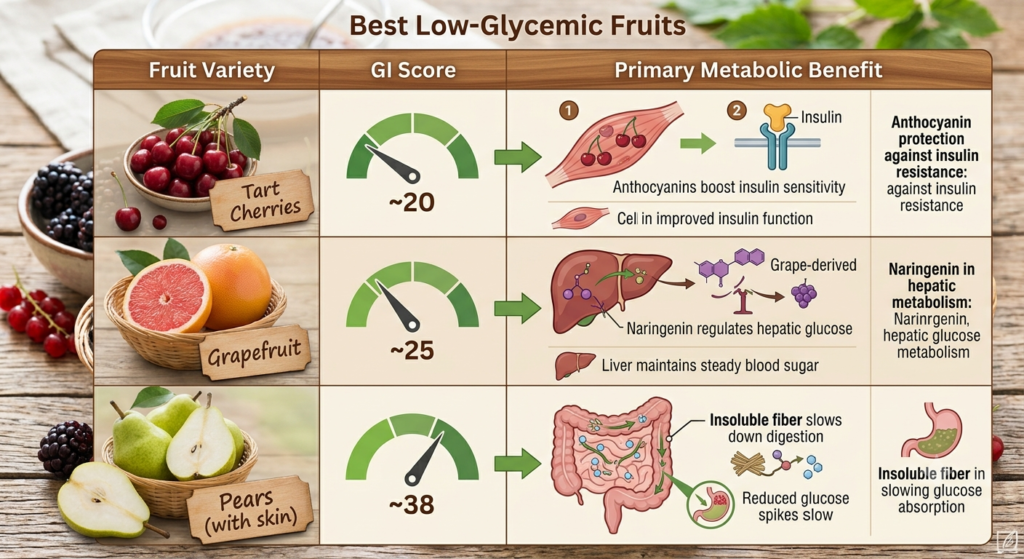
1. Tart Cherries (GI Score: ~20)
Tart cherries boast one of the lowest glycemic scores of any fruit available. This incredibly low rating stems from their massive concentration of anthocyanins, which are potent antioxidant pigments.
Furthermore, these specific antioxidants actively improve insulin sensitivity in your fat and muscle cells. Consequently, regular cherry consumption helps your body utilize its natural insulin much more effectively.
2. Grapefruit (GI Score: ~25)
This bitter citrus gem is another outstanding option for stabilizing your metabolic profile. Grapefruit contains a unique bioflavonoid compound called naringenin.
Medical researchers have discovered that naringenin mimics the action of certain diabetes medications. Specifically, it increases your liver’s sensitivity to insulin, which helps prevent excess glucose production.
3. Pears with the Skin (GI Score: ~38)
Pears offer a wonderfully sweet texture alongside an incredibly gentle glycemic response. However, you must eat the skin to reap the full clinical rewards.
The skin contains a dense matrix of insoluble fiber that physically slows down carbohydrate digestion in your gut. As a result, the natural fructose trickles into your bloodstream at a highly manageable pace.
The Biological Magic of Dietary Fiber and Polyphenols
Why do these specific fruits behave so differently compared to a glass of processed juice? The secret lies in the complex structural matrix that nature provides.
Soluble Fiber as a Natural Barrier
When you consume whole fruits, you take in large amounts of soluble fiber, such as pectin. Once inside your digestive tract, this fiber dissolves in water to form a thick, gelatinous substance. This gel-like matrix coats your intestinal walls, thereby slowing down the absorption of glucose. Therefore, selecting the best low-glycemic fruits for type 2 diabetes management relies heavily on fiber to protect your pancreas from sudden workloads.
Polyphenols and Alpha-Glucosidase Inhibition
In addition to fiber, low-GI fruits come packed with diverse plant chemicals known as polyphenols. These compounds actively inhibit an enzyme called alpha-glucosidase, which breaks down carbohydrates in your small intestine. By blocking this enzyme naturally, polyphenols significantly delay carbohydrate digestion, ensuring your post-meal blood sugars remain completely stable.
[Placeholder for Outbound Link: Read the National Center for Biotechnology Information (NCBI) study on fruit polyphenols and diabetes management]
Exploring the Superfood Power of Berries
No discussion about diabetes-friendly eating is complete without highlighting the incredible berry family. Raspberries, blackberries, and strawberries deserve a permanent spot in your refrigerator.
Blueberries and Endothelial Function
Blueberries have a slightly higher GI score than raspberries, yet they offer monumental vascular benefits. Diabetes frequently damages your delicate blood vessels through a process called glycation.
The intense antioxidants in blueberries shield your endothelial lining from this oxidative stress. Consequently, keeping blueberries in your rotation protects against long-term diabetic cardiovascular complications.
- Raspberries: Provide 8 grams of fiber per cup, making them a fiber powerhouse.
- Blackberries: Contain high amounts of vitamin K, which plays a role in insulin regulation.
- Strawberries: Packed with vitamin C to boost immunity and reduce chronic cellular inflammation.
[Placeholder for Internal Link: Top berry recipes designed for optimal glycemic control]
Strategic Meal Planning: The Power of Food Pairing
Even when you choose the best low-glycemic fruits for type 2 diabetes management, your eating habits still matter. You can optimize your results by applying a few strategic dietary techniques.
Always Pair Fruits with Healthy Fats or Proteins
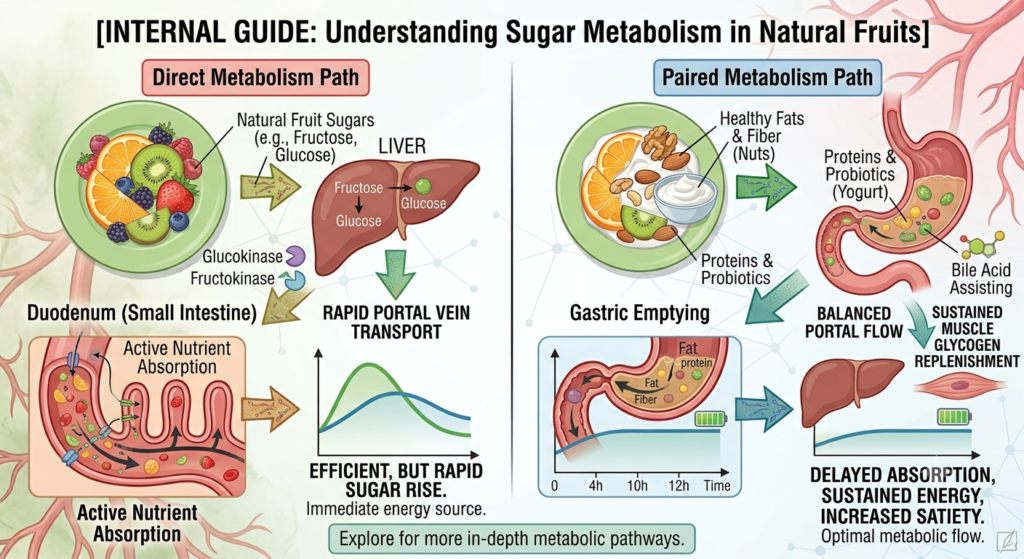
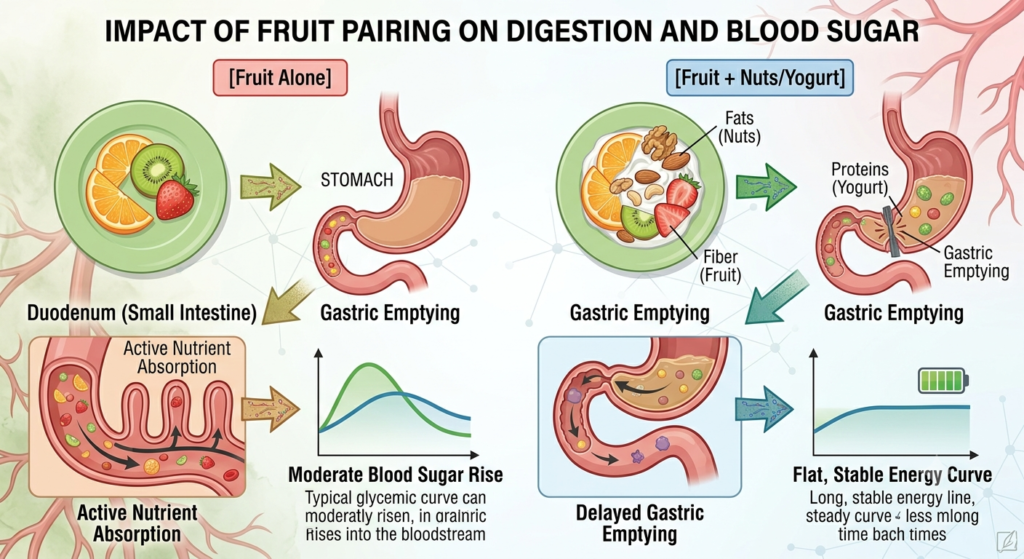
Never eat fruit completely on its own if you struggle with glycemic variability. Instead, always pair your low-GI fruit with a handful of raw almonds, walnuts, or plain Greek yogurt. The addition of healthy fats and proteins further delays gastric emptying. This simple pairing strategy flattens your glucose curve, providing long-lasting energy without a subsequent crash.
Watch Your Portion Sizes
Mindfulness remains essential even when utilizing low-glycemic principles. For instance, eating three cups of low-GI berries at once will still deliver a large total carbohydrate load. Stick to a standard serving size, which generally equates to one cup of whole berries or one medium-sized tree fruit.
Addressing Common Myths About Fruit and Diabetes
Misinformation regarding fruit consumption spreads quickly online. Many newly diagnosed individuals completely restrict fruit out of fear, which can lead to nutritional deficiencies.
Myth 1: Fruit Fructose is Identical to High-Fructose Corn Syrup
In reality, your body processes these sugars very differently. High-fructose corn syrup enters the liver rapidly because it lacks structural components. In contrast, the natural fructose inside the best low-glycemic fruits for type 2 diabetes management arrives bound to a matrix of vitamins, minerals, and cell walls. This organic structure prevents the liver from becoming overwhelmed.
Myth 2: All Sweet Fruits Are Forbidden
Taste can be incredibly deceiving. For example, a ripe pear tastes sweet but possesses a low GI score, whereas a plain white baked potato tastes savory but registers a massive GI score near 85. Always rely on laboratory-tested GI and GL charts rather than your taste buds alone.
Conclusion
Ultimately, managing type 2 diabetes does not mean living a life completely devoid of natural sweetness. By consistently prioritizing the best low-glycemic fruits for type 2 diabetes management, you can enjoy delicious flavors while simultaneously improving your metabolic metrics. Nature has perfectly packaged these fruits with the fiber, vitamins, and polyphenols your body needs to process sugars safely. Embrace these vibrant, whole foods and let them work as natural medicine for your heart and endocrine system.