
Are you noticing that reading fine print or driving at night feels a bit more challenging lately? As the years pass, our eyes become increasingly vulnerable to oxidative damage from sunlight, artificial screens, and environmental toxins. Fortunately, nature has hidden a powerful internal shield within the orchard to help maintain your visual sharpness. Incorporating 6 fruits loaded with lutein to protect your eyesight as you age into your weekly menu provides your retinas with structural protection against natural decline.
Many people believe that failing vision is simply an inevitable consequence of getting older. However, ocular nutrition proves that you can actively defend your macula by consuming specific carotenoids. Because your body cannot synthesize these protective pigments on its own, your daily dietary choices determine the strength of your visual defense system. Let’s look closely at the fascinating biological science behind the best fruits for lifelong eye health.
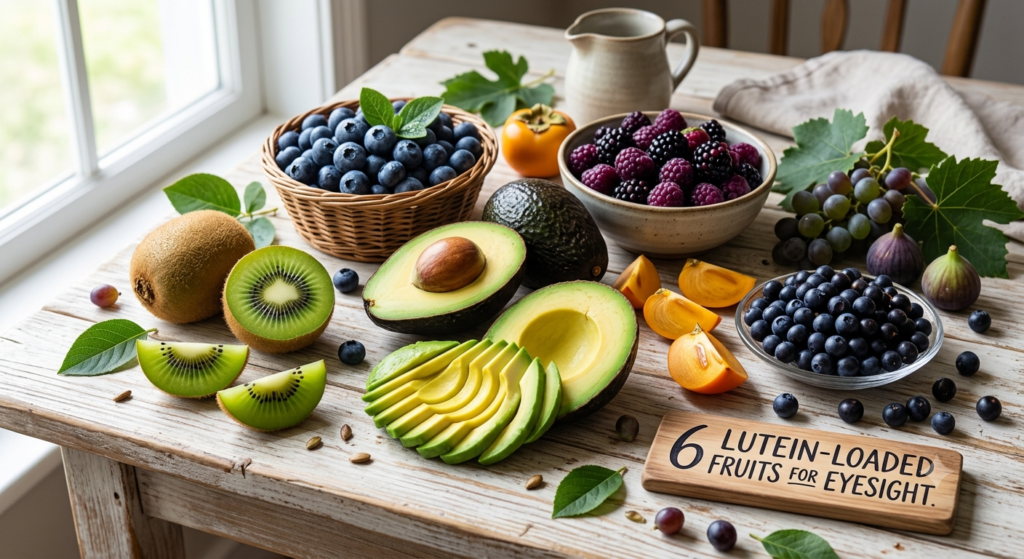
What is Lutein and How Does It Shield Your Eyes?
Before diving into our fruit list, you must understand how this incredible plant pigment functions inside the human body. Lutein is a naturally occurring xanthophyll carotenoid that concentrates heavily within the macula, which is the central part of your retina.
When you consume foods rich in this nutrient, your body deposits the pigments directly into your eyes to form macular pigment. This biological shield acts exactly like a pair of internal sunglasses. Specifically, it filters out high-energy blue light waves, which are notoriously responsible for damaging delicate photoreceptor cells.
The Fight Against Macular Degeneration
Without adequate pigment density, your retinas suffer from accelerated cellular breakdown when exposed to daily light. Consequently, this oxidative deterioration can eventually lead to Age-Related Macular Degeneration (AMD) or cataracts. Therefore, keeping your tissues saturated with organic carotenoids helps neutralize free radicals before they can harm your central vision.
[Placeholder for Internal Link: The ultimate guide to how plant carotenoids protect cellular health]
The 6 Best Fruits Loaded with Lutein for Aging Eyes
While leafy greens like spinach frequently dominate this nutritional conversation, several delicious fruits offer fantastic, highly bioavailable amounts of this compound. Let’s explore the top six fruit champions that keep your vision crystal clear.
1. Kiwi Fruit (The Heavyweight Champion)
Kiwi easily earns its spot among the 6 fruits loaded with lutein to protect your eyesight as you age due to its dense nutritional profile. A single serving of this fuzzy green fruit delivers an impressive dose of both lutein and its sister antioxidant, zeaxanthin.
Furthermore, kiwi comes packed with a massive amount of vitamin C. This particular vitamin works synergistically with carotenoids to reinforce the blood vessels that feed your retinas. Consequently, eating kiwi regularly provides an exceptional dual-layer protection system for your ocular pathways.
2. Hass Avocados (The Bioavailability Supercharger)
Avocados are mathematically unique because they combine eye-boosting carotenoids with high amounts of healthy monounsaturated fats. Lutein is a fat-soluble molecule, meaning your digestive tract cannot absorb it efficiently without dietary lipids.
The healthy monounsaturated fats inside an avocado instantly unlock the nutrient, allowing your intestines to absorb it rapidly. In addition, avocados contain lutein varieties that have been shown to cross the blood-retina barrier much easier than synthetic supplements.
3. Red Grapes (The Vascular Protectors)
Do not let their sweet taste fool you; red grapes are absolute powerhouses for longevity and eye maintenance. The skin of red grapes contains both lutein and a legendary polyphenol called resveratrol.
While the lutein absorbs blue light waves, the resveratrol focuses on reducing inflammation within the delicate ocular blood vessels. As a result, enjoying a cup of fresh grapes helps prevent the microvascular damage that often degrades aging eyesight.
The Biological Magic of Fruit Synergy in the Macula
Why do whole fruits perform so much better than isolated synthetic vitamins purchased from a store shelf? The secret lies in the complex structural matrix that nature provides within living plant cells.
The Dynamic Duo: Lutein and Zeaxanthin
In nature, lutein rarely travels alone; it almost always appears alongside zeaxanthin. These two pigments occupy slightly different zones within your macula to ensure total coverage. While lutein protects the outer edges of the macula, zeaxanthin settles directly in the absolute center where your vision is sharpest. Therefore, consuming the 6 fruits loaded with lutein to protect your eyesight as you age guarantees that you receive both compounds in their ideal biological ratios.
Halting the Glycation Process
In addition to blocking blue light, fruit polyphenols protect your eyes from a destructive process known as advanced glycation end-products (AGEs). Glycation occurs when excess circulating sugars bind to structural proteins, making the lenses of your eyes stiff and cloudy. The natural antioxidants in whole fruits actively inhibit this binding process, thereby keeping your eye lenses remarkably flexible and transparent over time.
[Placeholder for Outbound Link: Read the National Eye Institute (NEI) clinical studies on the Age-Related Eye Disease Study (AREDS2) formulations]
Continuing the Countdown: The Remaining Eye-Saving Fruits
Let’s look at the final three fruits that round out our ultimate vision-protection list. These options ensure your diet remains highly diverse and intensely flavorful.
4. Oranges and Mandarins
Citrus fruits are famous for vitamin C, but deeply colored varieties also contain substantial stores of xanthophylls. The specific pigments that give oranges their vibrant hue help accumulate protective macular density. Furthermore, the high fluid content in citrus fruits assists in maintaining proper intraocular pressure, which is vital for preventing glaucoma.
5. Blackberries and Blueberries
While dark berries are heavily celebrated for their anthocyanins, they also contribute valuable trace amounts of lutein to your daily diet. The true value of berries lies in their ability to improve nighttime vision.
The active plant chemicals in dark berries accelerate the regeneration of rhodopsin. Rhodopsin is a sensitive purple pigment in your retinas that allows you to see clearly in low-light environments.
6. Persimmons
Persimmons are an underutilized autumn treasure that boasts an incredibly high concentration of total carotenoids. Their rich, orange flesh indicates a massive wealth of eye-saving nutrients that digest easily. Eating sliced persimmons during their peak season gives your ocular tissues a significant seasonal boost to undo summer sun damage.
- Oranges: Support optimal fluid pressure inside the eyeball while delivering vital antioxidants.
- Blackberries: Enhance dark adaptation speeds, making nighttime driving much safer as you age.
- Persimmons: Provide dense seasonal concentrations of structural retinal pigments.
[Placeholder for Internal Link: Top antioxidant-rich fruit salad ideas for long-term health]
Strategic Habits for Enhancing Carotenoid Absorption
Simply eating these fruits occasionally will not yield the best long-term medical results. To truly protect your eyesight, you must understand how to optimize your daily consumption habits.
Combine Fruits with Healthy Fats
As established with avocados, fat is the ultimate golden key for unlocking carotenoid absorption. If you are eating kiwis, grapes, or oranges, try pairing them with a handful of raw walnuts, pumpkin seeds, or a dollop of unsweetened almond butter. This simple combination delays gastric emptying, giving your body ample time to harvest every single microgram of eye-protecting pigment.
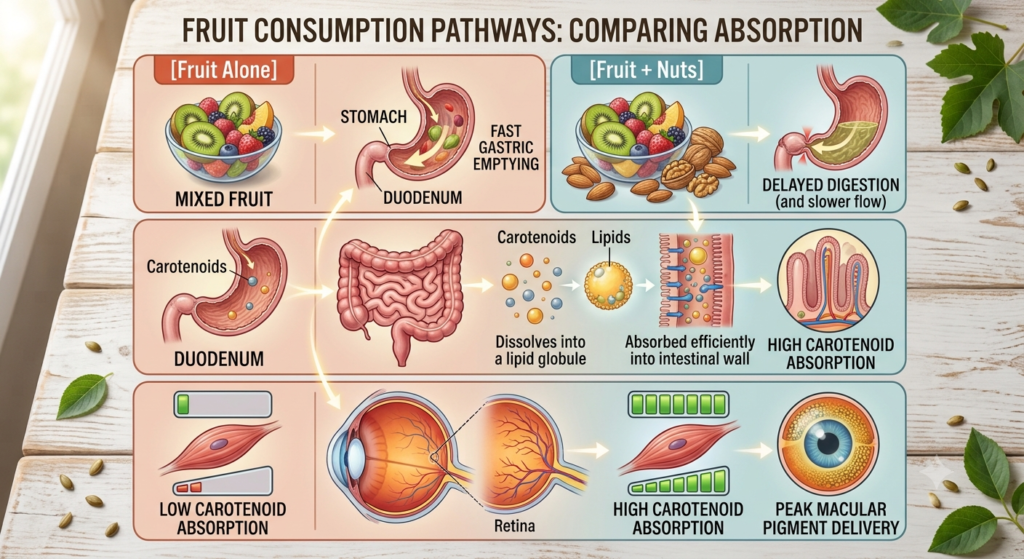
Avoid Cooking Your Eye-Boosting Fruits
Always prioritize eating these specific fruits in their raw, fresh state. High temperatures can alter the delicate chemical bonds of carotenoids, reducing their overall biological effectiveness. Keep your fruits cool, store them in dark spaces, and slice them immediately before eating to prevent air oxidation from degrading the nutrients.
Addressing Common Myths About Eye Nutrition
A few persistent misconceptions often steer people away from using fruit as a legitimate form of preventative medicine. Let’s clear up these myths using verified clinical science.
Myth 1: Carrots Are the Only Fruit or Veggie for Eyes
While carrots contain high amounts of beta-carotene, your body converts this specific nutrient into vitamin A to prevent night blindness. However, beta-carotene does not accumulate in the macula to filter blue light. For real protection against macular degeneration, you must focus specifically on fruits rich in lutein and zeaxanthin rather than relying on carrots alone.
Myth 2: Fruit Sugar Damages Retinal Blood Vessels
Refined industrial sugars absolutely cause retinal damage through diabetic retinopathy. However, the natural sugars packaged inside the 6 fruits loaded with lutein to protect your eyesight as you age do not behave this way. The dietary fiber matrix in whole fruit slows down absorption perfectly. This completely prevents dangerous insulin spikes, allowing your body to safely absorb the vision-saving pigments.
Conclusion
Ultimately, preserving your visual independence as you age does not require relying solely on expensive prescriptions or invasive medical procedures. Nature has gracefully hidden the ultimate visual shield right inside your local grocery store’s fruit aisle. By consistently incorporating these 6 fruits loaded with lutein to protect your eyesight as you age into your everyday lifestyle, you actively build a powerful defense system against structural decline. Embrace these vibrant, whole foods today, and let their science-backed nutrients keep your view of the world beautiful, sharp, and brilliantly clear for decades to come.