
Introduction
Are you looking for a natural, science-backed way to keep your cardiovascular system running cleanly? Heart disease remains a leading health concern across the globe, forcing many individuals to search for preventative dietary solutions. Fortunately, nature has provided a remarkably powerful vascular shield inside a vibrant, ruby-red fruit. Understanding exactly how the antioxidants in pomegranates protect against arterial plaque allows you to defend your blood vessels from chronic structural damage from the inside out.
Many people assume that managing cardiovascular buildup requires strict medical prescriptions or completely eliminating fats. However, clinical nutrition reveals that shielding your blood vessels from chemical oxidation is an equally critical step. By introducing specific, highly potent plant chemicals into your daily routine, you actively change the way your body handles circulating cholesterol. Let’s look closely at the incredible cellular science behind this legendary cardiovascular superfood.
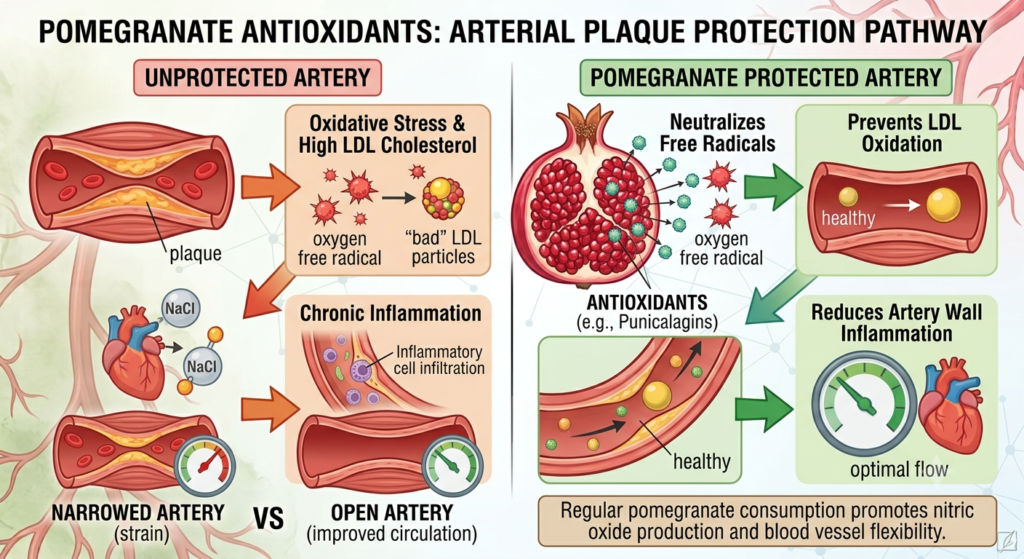
The Root Cause of Arterial Plaque: Lipid Peroxidation
To appreciate how pomegranates protect your heart, you must first understand how arterial blockages actually form. Many people believe that simply having circulating Low-Density Lipoprotein (LDL) cholesterol in the bloodstream automatically causes blockages.
However, standard LDL cholesterol is not inherently dangerous to your blood vessel walls. The real trouble begins when these lipid molecules encounter unstable free radicals floating through your circulatory system. This destructive interaction triggers a biological chain reaction known scientifically as lipid peroxidation.
How White Blood Cells Create Blockages
Once an LDL molecule becomes oxidized, your body recognizes it as a foreign threat rather than a useful nutrient. Consequently, your immune system dispatches specialized white blood cells called macrophages to consume the toxic lipid.
- Foam Cell Formation: Macrophages gorge themselves on oxidized cholesterol until they transform into bloated foam cells.
- Fatty Streaks: These heavy foam cells embed themselves directly into the delicate endothelial lining of your arteries.
- Fibrous Caps: Over time, your body builds a hard calcified layer over these fatty streaks, creating dangerous arterial plaque.
[Placeholder for Internal Link: The ultimate guide to how fruit nutrients fight chronic cellular oxidation]
The Molecular Warriors: Punicalagins and Ellagitannins
Now that you understand the danger of oxidation, let’s look at the specific plant compounds that stop it. Pomegranates owe their immense cardiovascular power to a unique family of polyphenols called ellagitannins.
The undisputed heavyweights among these compounds are punicalagins, which are massive, highly water-soluble molecules found almost exclusively in pomegranate juice and peels. Punicalagins are so biologically effective that they give pomegranates an antioxidant capacity that is three times higher than that of green tea or red wine.
Halting the Oxidation Chain Reaction
When you consume pomegranates, these punicalagins break down into smaller, highly bioavailable compounds within your digestive tract. These molecules circulate through your bloodstream, acting like molecular sponges that neutralize free radicals on contact.
Consequently, by sweeping away these volatile radicals, the fruit prevents them from attacking your circulating LDL particles. Therefore, uncovering how the antioxidants in pomegranates protect against arterial plaque reveals that preventing LDL oxidation is the ultimate key to clean arteries.
Activating PON1: The Body’s Natural Plaque Vacuum
The benefits of pomegranates extend far beyond simply blocking the formation of new blockages. In fact, modern cardiology has discovered that these red fruits actively help your body clean up existing arterial deposits.
What is Paraoxonase 1?
Pomegranates accomplish this cleanup feat by significantly increasing the production of an incredible enzyme called Paraoxonase 1 (PON1). This specific enzyme travels through your bloodstream tightly bound to High-Density Lipoprotein (HDL) cholesterol, which is commonly known as the “good” cholesterol.
PON1 acts like a natural vacuum cleaner for your blood vessels. Specifically, it hunts down and destroys any oxidized lipids that have already managed to embed themselves within your arterial walls.
Reversing Existing Blockages
Clinical trials have shown that drinking pure pomegranate juice consistently over several months increases circulating PON1 levels by up to 40 percent. This massive enzymatic surge allows your body to slowly dissolve old fatty streaks and reduce the overall thickness of existing blockages. Furthermore, maintaining high PON1 activity ensures that your HDL cholesterol remains highly efficient at transporting excess fats back to your liver for safe removal.
[Placeholder for Outbound Link: Read the PubMed study on how pomegranate polyphenols enhance PON1 expression and reverse carotid artery stenosis]
Boosting Nitric Oxide to Maintain Vessel Flexibility
Arterial health relies on more than just keeping the passages clear; your blood vessels must also remain highly flexible and elastic. Healthy arteries naturally widen and contract to regulate blood pressure smoothly.
Reversing Endothelial Dysfunction
The delicate inner lining of your blood vessels is called the endothelium. When this lining becomes damaged by high blood sugar or stress, it loses its ability to produce a vital signaling gas known as nitric oxide.
Without sufficient nitric oxide, your blood vessels become stiff, narrow, and highly prone to catching circulating fats. This dangerous state of stiffness is called endothelial dysfunction, and it directly accelerates plaque formation.
Restoring Natural Vasodilation
Fortunately, the active compounds in pomegranates directly protect nitric oxide molecules from breaking down prematurely. Furthermore, they stimulate your endothelial cells to synthesize fresh nitric oxide at an accelerated pace.
As a result, your blood vessels relax, widen naturally, and experience significantly less friction from daily blood flow. This natural drop in mechanical stress prevents the microscopic tears in your vessel walls where plaque usually loves to take root.
[Placeholder for Internal Link: Top blood-pressure-lowering fruits you should include in your breakfast]
Practical Ways to Incorporate Pomegranates for Heart Health
To harvest the full clinical rewards of this superfood, you must consume it in a form that respects its biological structure. You can easily optimize your daily intake by choosing the right format.
Whole Arils vs. Pure Juice
Both whole pomegranate seeds (arils) and pure juices offer fantastic cardiovascular benefits, but they serve slightly different purposes. Whole arils provide excellent dietary fiber, which helps slow down sugar absorption in your intestines.
However, pure, 100% unsweetened pomegranate juice actually offers a higher concentration of antioxidants. This occurs because commercial pressing processes crush the pomegranate peel, which forces the highly concentrated punicalagins directly into the liquid.
- Check the Label: Always buy 100% pure pomegranate juice with absolutely zero added industrial sugars.
- Watch Portions: Stick to a daily serving of 4 to 8 ounces of juice to avoid consuming excess fruit calories.
- Fresh is Best: Toss fresh arils over spinach salads to pair the antioxidants with the nitrates found in leafy greens.
Addressing Misconceptions About Pomegranates and Cholesterol
A few persistent myths often confuse individuals who are trying to optimize their cardiovascular health using natural foods. Let’s clarify these misunderstandings using established biochemical facts.
Myth 1: Fruit Sugars Damage Arteries Identically to Refined Sugars
While refined high-fructose corn syrup definitely causes vascular inflammation and glycation, whole fruit extracts behave very differently. The immense wave of polyphenols inside pomegranates completely counteracts any minor glycemic stress. In fact, clinical studies show that even type 2 diabetic patients experience a dramatic reduction in arterial inflammation after consuming pure pomegranate juice.
Myth 2: Pomegranates Can Completely Replace Prescribed Statins
While discovering how the antioxidants in pomegranates protect against arterial plaque proves its immense power as preventative medicine, it should not automatically replace your doctor’s prescriptions if you suffer from severe advanced cardiovascular disease. Instead, think of this fruit as a powerful biological partner. Pomegranates complement traditional medical therapies by providing a unique layer of antioxidant defense that standard medications cannot replicate.
Conclusion
Ultimately, maintaining a clean, flexible, and highly efficient cardiovascular system does not require relying solely on artificial chemical interventions. Nature has packaged an incredibly sophisticated vascular medicine right inside the rugged skin of the pomegranate. By consistently delivering a steady supply of punicalagins, ellagitannins, and nitric oxide boosters to your bloodstream, you actively shield your endothelial lining from the destructive forces of oxidation. Embrace this vibrant superfood as a foundational pillar of your daily heart-healthy lifestyle, and let its science-backed antioxidants protect your blood vessels for decades to come.