
Choosing between the vibrant options in the grocery store produce aisle can feel like a delicious challenge. Many health-conscious individuals find themselves staring at the berry display, wondering which tiny powerhouse offers the absolute best nutritional return for their money. If you have ever debated between these two popular choices, understanding the science behind blueberries vs blackberries: which berry has more antioxidants will completely transform how you approach your morning fruit bowl.
Most people assume that all dark berries contain roughly the same amounts of health-boosting vitamins. However, complex biological evaluations reveal that their specific chemical profiles differ quite dramatically. By looking closely at their cellular structures, you can strategically use these fruits to target unique health goals. Let’s dive deep into the fascinating molecular science behind these beloved superfoods to see which one truly claims the antioxidant crown.
The Core Battle: Measuring Antioxidant Capacity
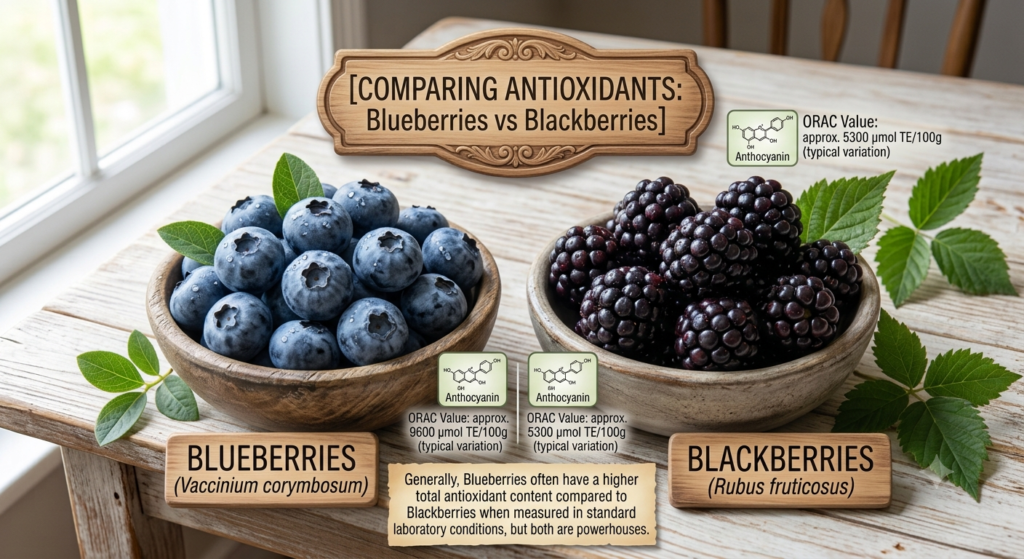
To solve the mystery of blueberries vs blackberries: which berry has more antioxidants, scientists use a standardized test called the ORAC assay. ORAC stands for Oxygen Radical Absorbance Capacity. This biological test measures exactly how well a food’s active molecules can neutralize unstable free radicals in a laboratory setting.
When researchers put both berries through this rigorous test, the results are surprisingly close. However, blackberries consistently pull ahead in overall raw antioxidant capacity. This advantage is largely due to their unique physical structure, which contains more fiber and seed-bound polyphenols than their smooth blue counterparts.
Understanding the Pigment Power
The dark, intense colors of both fruits are not just for show. These deep shades indicate the presence of anthocyanins, which are water-soluble vacuolar pigments belonging to the parent class of flavonoids.
- Blueberries: Feature high concentrations of delphinidin and malvidin anthocyanins, which create their signature dusty blue hue.
- Blackberries: Contain massive amounts of cyanidin-3-glucoside, which creates their deep, almost pitch-black appearance.
[Placeholder for Internal Link: Discover how plant flavonoids and natural pigments shield human cells]
Nutritional Breakdown: Blueberries vs Blackberries
While antioxidant scores are highly important, a true comparison requires analyzing their complete nutritional profiles. Let’s look at how a single cup of each raw fruit stacks up against the other in terms of vital vitamins and macronutrients.
The Fiber and Sugar Discrepancy
As shown in our table, blackberries offer a clear metabolic advantage for anyone watching their sugar intake. They contain nearly double the dietary fiber of blueberries while carrying less than half the total sugar.
Consequently, this high-fiber matrix dramatically slows down the absorption of carbohydrates in your gut. This prevents sudden insulin spikes and provides a highly steady release of clean energy.
Blueberries: The Legendary Cognitive Guardians
Despite losing the raw ORAC score battle to blackberries, blueberries excel in specific areas of targeted human health. In fact, modern neuroscience frequently refers to blueberries as the ultimate brain food.
Crossing the Blood-Brain Barrier
The unique anthocyanins in blueberries possess the rare ability to cross the blood-brain barrier. Once inside your brain tissues, these compounds settle directly in the hippocampus, which is the primary center for learning and memory.
Furthermore, clinical studies show that blueberry antioxidants improve signal transmission between neurons. This action helps shield delicate brain cells from age-related decay and everyday mental fatigue.
Enhancing Vascular Flexibility
In addition to boosting brain power, blueberries do wonders for your cardiovascular health. The active compounds in these berries stimulate your blood vessels to produce more nitric oxide.
Consequently, your arteries relax and widen naturally, which helps lower blood pressure and eases physical stress on your heart. Therefore, blueberries remain an irreplaceable asset for long-term arterial health.
[Placeholder for Outbound Link: Read the Harvard T.H. Chan School of Public Health study on how regular berry consumption supports heart and brain longevity]
Blackberries: The Digestive and Skin Protectors
While blueberries protect your brain, blackberries excel at shielding your digestive tract and keeping your skin youthful and resilient.
Supporting a Thriving Microbiome
The high amount of prebiotic fiber in blackberries acts as an excellent fuel source for the beneficial bacteria living inside your gut microbiome. As these microbes ferment the berry fibers, they produce short-chain fatty acids like butyrate.
Butyrate plays a vital role in reducing gut inflammation and keeping your intestinal lining incredibly strong. Consequently, eating blackberries regularly can help alleviate common digestive discomforts.
Fighting Collagen Breakdown with Vitamin C
Blackberries are also a fantastic source of vitamin C, containing more than twice the amount found in blueberries. Your body relies heavily on vitamin C to synthesize fresh collagen fibers.
- Collagen Synthesis: Rebuilds the structural framework of your skin, joints, and blood vessels.
- UV Defense: Neutralizes the free radicals generated by sun exposure, helping to prevent premature wrinkles.
- Wound Healing: Accelerates tissue repair throughout the body.
Choosing the Best Option for Your Specific Health Goals
Now that we have compared blueberries vs blackberries: which berry has more antioxidants, you might wonder how to choose between them. The answer depends heavily on your unique daily wellness needs.
For Cognitive Performance and Low Acid Needs
If your primary goal is to boost mental clarity, study for exams, or protect your brain as you age, make blueberries your daily go-to option.
Additionally, blueberries are less acidic than blackberries. This makes them much gentler on sensitive stomachs that are prone to acid reflux or heartburn.
For Weight Management and Blood Sugar Control
If you are managing diabetes, following a low-carb diet, or trying to lose weight, blackberries are the clear winner.
Their ultra-low sugar content and massive fiber dose keep you feeling full for hours without disrupting your insulin levels. Additionally, they are perfect for anyone looking to naturally boost their daily fiber intake.
[Placeholder for Internal Link: The best low-sugar fruits for healthy weight loss and stable insulin]
How to Get the Most Antioxidants Out of Your Berries
To ensure you harvest the maximum possible benefits from either berry, you must handle and store them correctly. Simple everyday habits can preserve or accidentally destroy these delicate molecules.
Keep Them Cool and Dry
Always store your berries in the refrigerator, but avoid washing them until right before you plan to eat them. Excess moisture triggers rapid mold growth, which quickly ruins the fruit.
Additionally, avoid exposing your berries to high cooking temperatures whenever possible. Heat can break down delicate vitamin C and alter the structure of anthocyanins, reducing their healing powers.
Try Freezing to Lock in Nutrients
If you cannot finish your fresh berries before they spoil, do not hesitate to freeze them. In fact, research shows that freezing actually preserves antioxidant content beautifully.
The ice crystals break down the plant cell walls slightly, which can actually make the protective anthocyanins even more bioavailable to your digestive system once thawed.
Common Misconceptions About Berry Nutrition
Let’s clear up a few persistent myths about these two superfoods so you can make highly informed dietary choices.
Myth 1: Wild Berries and Store-Bought Berries Offer Identical Benefits
While store-bought berries are highly nutritious, wild-harvested berries often carry significantly higher antioxidant concentrations. Because wild plants must defend themselves against harsh natural elements without human help, they produce much higher amounts of protective polyphenols.
Myth 2: Berry Syrups and Jams are Great Substitutes for Fresh Fruit
Many commercial berry syrups and jams are heavily processed and packed with refined sugars. This intense heat processing destroys the delicate vitamin C and strips away the valuable dietary fiber. To enjoy the true medicinal benefits of these fruits, always prioritize eating them whole and raw.
Conclusion
In the friendly matchup of blueberries vs blackberries: which berry has more antioxidants, both fruits emerge as extraordinary allies for human health. While blackberries claim the crown for raw antioxidant power, high fiber, and vitamin C, blueberries remain unmatched in their ability to protect your brain and boost cognitive performance. Ultimately, you do not have to choose just one. By mixing both of these delicious berries into your weekly diet, you provide your body with a diverse, highly effective shield against oxidative stress and chronic disease. Enjoy them fresh, keep them raw, and let nature’s finest antioxidants keep you vibrant and healthy for years to come!