
In modern wellness, few words carry as much weight, or cause as much quiet anxiety, as chronic inflammation. Unlike the acute, necessary inflammation that reddens and heals a scraped knee, chronic low-grade systemic inflammation is a silent, creeping fire. It works backstage, quietly damaging healthy tissue, destabilizing cellular structures, and driving the progression of some of the most pervasive health issues of our time: cardiovascular disease, Type 2 diabetes, metabolic syndrome, and neurodegenerative decline.
As researchers seek ways to extinguish this internal fire, interest has shifted away from purely pharmaceutical approaches toward the vast world of nutritional bioactives. Among the most promising candidates are citrus fruit polyphenols—a specialized family of secondary plant metabolites found abundantly in oranges, lemons, grapefruits, limes, and tangerines.
But can drinking an extra glass of orange juice or adding a squeeze of lemon to your morning water truly shift the tide of a systemic inflammatory cascade? The short answer is yes, but the mechanics, biochemistry, and clinically effective dosages are far more nuanced than a simple health slogan.
Understanding the Enemy: The Cascade of Chronic Systemic Inflammation
To appreciate how citrus polyphenols exert their protective effects, we must first look at what happens when the body’s inflammatory response loses its off-switch.
Acute inflammation is a highly orchestrated, self-limiting defense mechanism. When cells are damaged or pathogens invade, the immune system rapidly deploys white blood cells and signals molecules to the site of injury. Once the threat is neutralized, a distinct phase known as “resolution” begins, driven by specialized pro-resolving mediators that return the tissue to a state of homeostasis.
Chronic systemic inflammation happens when this resolution phase fails. Instead of shutting down, the immune system remains stuck in a low-gear, continuous state of alert. This state is characterized by several key biological shifts:
- Continuous Immune Activation: The Hypothalamic-Pituitary-Adrenal (HPA) axis and peripheral immune cells undergo persistent cellular stress.
- The Cytokine Storm Lineup: Macrophages and mast cells continuously secrete pro-inflammatory signaling proteins, primarily Tumor Necrosis Factor-alpha (TNF-$\alpha$), Interleukin-6 (IL-6), and Interleukin-1 beta (IL-1$\beta$).
- Hepatic Response: In response to elevated IL-6, the liver synthesizes and releases C-Reactive Protein (CRP), a primary clinical biomarker for systemic inflammation.
- Oxidative Destruction: Persistent cytokine release fuels the excessive production of Reactive Oxygen Species (ROS). When ROS outnumbers the body’s endogenous antioxidant defenses, it induces cellular oxidation, leading to DNA damage, lipid peroxidation of cell membranes, and accelerated organ aging.
When this destructive loop is left unchecked for years, it compromises the endothelial lining of blood vessels (causing atherosclerosis), disrupts insulin signaling pathways (causing insulin resistance), and breaks down the blood-brain barrier (driving neuroinflammation).
The Molecular Chemistry of Citrus Polyphenols
Plants do not synthesize polyphenols for human benefit; they produce them as a defense system against ultraviolet radiation, oxidative stress, fungal infections, and predatory insects. In citrus fruits (members of the Rutaceae family), these secondary metabolites are exceptionally concentrated, particularly within the skin (flavedo), white pith (albedo), structural membranes, and juice vesicles.
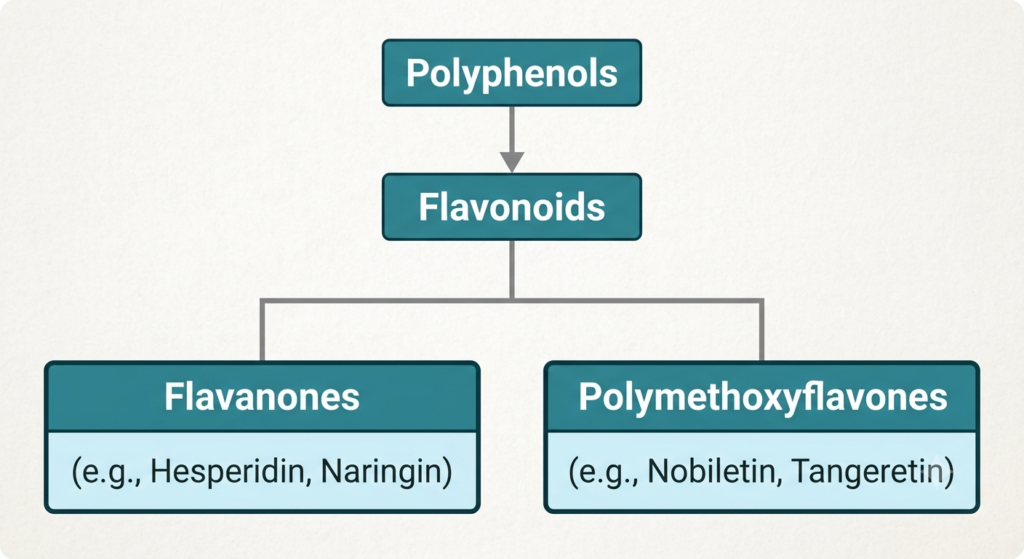
While citrus contains several classes of polyphenols, the dominant varieties belong to the flavonoid superfamily, specifically the flavanones.
The Flavanones: Structure and Characteristics
Flavanones are distinct from other flavonoids (like the flavonols in onions or the anthocyanins in berries) due to the absence of a double bond between positions 2 and 3 of their central carbon ring structure. In nature, they primarily exist as glycosides—meaning they are bound to a sugar molecule (typically rutinose or neohesperidose), which increases their stability but heavily influences how they are processed by the human digestive system.
- Hesperidin: The undisputed heavy hitter of sweet oranges (Citrus sinensis) and mandarins. Hesperidin accounts for up to 90% of the total total flavonoid content in orange juice. When the sugar moiety (rutinose) is removed by gut bacteria, it transforms into its highly active aglycone form: hesperetin.
- Naringin: The compound responsible for the signature bitter bite of grapefruit (Citrus paradisi) and pummelos (Citrus grandis). Once cleaved by the microbiome, it becomes naringenin. Naringin is highly concentrated in the non-edible peel and structural membranes of the fruit.
- Narirutin: A secondary flavanone glycoside found alongside hesperidin in sweet oranges, contributing to the overall synergistic effect of citrus extracts.
- Eriocitrin: Predominant in lemons (Citrus limon) and limes, eriocitrin is unique because its aglycone form, eriodictyol, carries strong water-solubility properties and potent hydroxyl-radical scavenging abilities.
The Polymethoxyflavones (PMFs)
Exclusive to the rinds of certain citrus varieties, particularly tangerines and bitter oranges, polymethoxyflavones are structurally unique. They are heavily methylated, meaning they carry multiple methoxy groups. This structural modification makes them highly hydrophobic (fat-soluble), allowing them to pass through biological membranes with remarkable ease compared to standard water-soluble flavonoids. The most heavily researched PMFs include:
- Nobiletin
- Tangeretin
How Citrus Polyphenols Fight Inflammation at the Cellular Level
Citrus fruit polyphenols do not simply act as chemical sponges that sop up free radicals. While they do possess direct antioxidant activity, their true power lies in their ability to act as cellular signaling modulators. They literally instruct your cells to dial down the production of inflammatory proteins while turning up internal defense mechanisms.
1. Inactivation of the NF-$\kappa$B Signaling Pathway
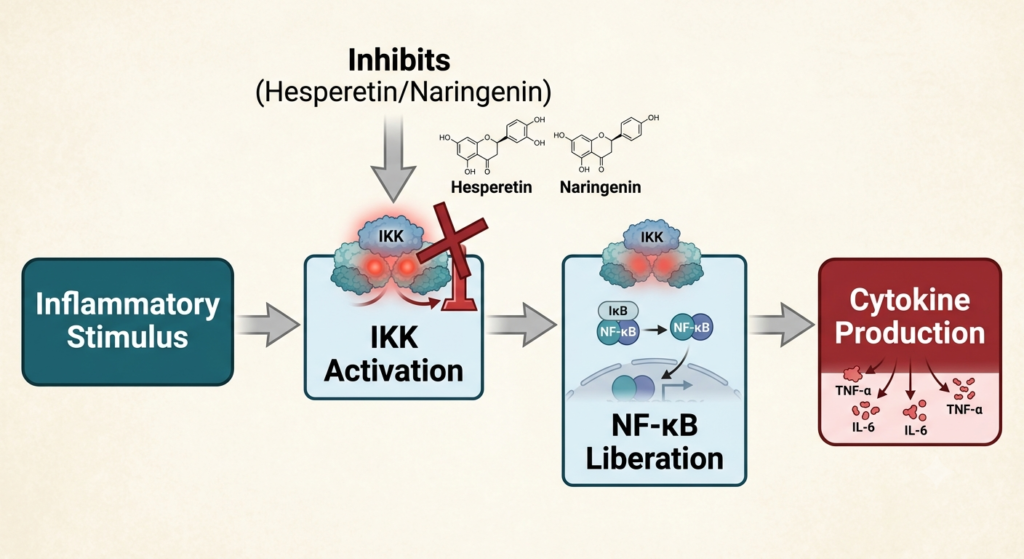
Nuclear Factor kappa-light-chain-enhancer of activated B cells (NF-$\kappa$B) is the master genetic switch for inflammation. In a resting cell, NF-$\kappa$B is held captive in the cytoplasm by an inhibitory protein called I$\kappa$B. When an inflammatory trigger (like an endotoxin, free radical, or saturated fat) binds to a cellular receptor, it activates an enzyme called I$\kappa$B Kinase (IKK). IKK destroys the inhibitor, freeing NF-$\kappa$B to march into the cell nucleus, bind to DNA, and ignite the transcription of pro-inflammatory cytokines.
Pre-clinical and in vitro models show that hesperetin and naringenin directly inhibit the activation of IKK. By keeping the inhibitory bracket locked around NF-$\kappa$B, these citrus compounds prevent the inflammatory signal from ever reaching the cellular blueprints.
2. Downregulation of COX-2 and iNOS Enzymes
Once NF-$\kappa$B enters the nucleus, it triggers the production of two highly destructive enzymes: Cyclooxygenase-2 (COX-2) and Inducible Nitric Oxide Synthase (iNOS).
- COX-2 converts arachidonic acid into pro-inflammatory prostaglandins (the same enzyme targeted by over-the-counter NSAID pain relievers like ibuprofen).
- iNOS produces massive amounts of nitric oxide gas, which combines with superoxide to form peroxynitrite—a highly destructive reactive nitrogen species.
By blocking the upstream NF-$\kappa$B path, citrus flavanones significantly suppress the gene expression of both COX-2 and iNOS, offering an organic approach to pain and swelling pathways without the common gastric side effects associated with synthetic NSAIDs.
3. Upregulation of the Keap1/Nrf2 Antioxidant Pathway
While citrus polyphenols suppress the bad pathways, they actively supercharge the good ones. The Nrf2 pathway is the body’s primary defense against oxidative stress. Under normal conditions, Nrf2 is bound in the cytoplasm by a sensor protein called Keap1.
Citrus polyphenols disrupt the Keap1-Nrf2 bond. Once liberated, Nrf2 migrates into the nucleus and binds to the Antioxidant Response Element (ARE) on the DNA. This initiates the rapid synthesis of the body’s master endogenous antioxidants:
- Superoxide Dismutase (SOD): Neutralizes the highly destructive superoxide radical.
- Catalase (CAT): Breaks down hydrogen peroxide into harmless water and oxygen.
- Glutathione Peroxidase (GSH-Px): Utilizes reduced glutathione to neutralize lipid peroxides, preserving cell membrane integrity.
4. Mitigating Mitogen-Activated Protein Kinase (MAPK) Pathways
Cellular stress also triggers the MAPK pathway, which includes c-Jun N-terminal kinases (JNK) and p38 MAPK. These pathways regulate cellular apoptosis (programmed cell death) and tissue destruction in chronic diseases like rheumatoid arthritis and neurodegeneration. Citrus polyphenols—particularly the polymethoxyflavones nobiletin and tangeretin—have been shown to selectively reduce the phosphorylation (activation) of p38 and JNK, protecting delicate tissues like synovial membranes and neurons from stress-induced death.
Clinical Evidence: What Human Trials Tell Us
While cell culture and animal models provide fascinating insights into molecular pathways, the gold standard of medical proof always rests on human clinical trials. Over the past decade, numerous randomized, double-blind, placebo-controlled trials have put citrus fruit polyphenols to the test against systemic inflammation.
The Power of Postprandial Protection
One of the most immediate ways chronic inflammation builds up is through postprandial inflammation—the burst of metabolic stress, endotoxemia, and oxidative damage that occurs after consuming a meal high in refined sugars and saturated fats.
In a landmark clinical trial, researchers gave healthy participants a high-fat, high-carbohydrate meal alongside either a glass of water, a sugar-sweetened beverage, or a glass of 100% natural orange juice containing natural citrus flavanones.
- The water and sugar-water groups experienced a sharp spike in oxygen radical production and a major uptick in the expression of toll-like receptors (TLR-2 and TLR-4) on white blood cells within hours of eating.
- The group consuming the citrus polyphenol-rich orange juice experienced a near-complete blunting of this post-meal inflammatory spike. The natural polyphenols effectively insulated the cells from the metabolic shock of the meal.
Long-Term Inflammatory Marker Reduction
Beyond short-term meal protection, consistent consumption of citrus polyphenols has demonstrated a clear ability to systematically lower systemic inflammatory markers over time.
A comprehensive meta-analysis of randomized controlled trials evaluating daily orange juice consumption over periods ranging from 4 to 12 weeks revealed a steady trend:
- C-Reactive Protein (CRP): Statistically significant reductions across multiple cohorts, particularly in individuals with elevated baseline inflammatory states.
- IL-6 and TNF-$\alpha$: Demonstrable decreases in circulating levels, indicating a generalized quietening of chronic immune cell activation.
Cardiovascular and Endothelial Performance
Inflammation in the cardiovascular system directly contributes to arterial stiffening and plaque vulnerability. Clinical trials evaluating purified citrus extracts (such as a 500mg daily dose of 2S-hesperidin) in patients with metabolic syndrome or Type 2 diabetes have shown notable improvements in Flow-Mediated Dilation (FMD)—a direct measurement of how well blood vessels can relax and dilate. This improvement was accompanied by a concurrent drop in circulating vascular adhesion molecules (such as VCAM-1 and ICAM-1), which are the molecular “hooks” that allow inflammatory white blood cells to stick to blood vessel walls and initiate plaque formation.
Impact on Specific Inflammatory Diseases
Systemic inflammation manifests differently depending on an individual’s genetic vulnerabilities and lifestyle factors. Citrus polyphenols show significant promise in several key areas:
1. Metabolic Syndrome and Obesity
Obesity is increasingly recognized as a disease of chronic, low-grade inflammation centered within visceral adipose tissue (fat surrounding internal organs). As fat cells expand past their capacity, they suffer from hypoxia (lack of oxygen), begin to die, and attract macrophages. These macrophages form “crown-like structures” around dead fat cells and pour out TNF-$\alpha$ and IL-6, which travels through the portal vein straight to the liver, causing hepatic insulin resistance.
Citrus polyphenols, particularly naringenin and nobiletin, have been shown to shift metabolic processes by activating AMP-activated protein kinase (AMPK)—the body’s master energy regulator. This action helps:
- Inhibit fatty acid synthesis in the liver.
- Suppress the inflammatory output of visceral adipose tissue.
- Enhance adiponectin secretion, a hormone that improves insulin sensitivity and exerts direct anti-inflammatory effects on vascular walls.
2. Neuroinflammation and Cognitive Preservation
The brain is highly susceptible to oxidative stress due to its immense oxygen consumption and high concentrations of easily oxidizable polyunsaturated fatty acids. In neurodegenerative conditions like Alzheimer’s and Parkinson’s diseases, specialized immune cells in the brain called microglia become chronically hyper-activated, producing a constant stream of inflammatory cytokines that damage neighboring neurons.
Most polyphenols struggle to offer protection here because they cannot pass through the blood-brain barrier (BBB). However, the aglycones of citrus flavanones (hesperetin, naringenin) and especially the highly lipid-soluble polymethoxyflavones (nobiletin) successfully cross this barrier. Inside the brain, they inhibit microglial over-activation, protect mitochondrial function within neurons, and mitigate the neuroinflammatory cascades triggered by amyloid-beta plaques.
3. Joint Health and Osteoarthritis
Osteoarthritis was long considered a simple “wear-and-tear” disease of the cartilage. Today, we know it is heavily driven by localized inflammatory loops within the joint capsule. Cytokines like IL-1$\beta$ stimulate chondrocytes (cartilage cells) to produce Matrix Metalloproteinases (MMPs)—destructive enzymes that systematically chew away the extracellular collagen matrix of the joint.
In clinical settings, supplementation with citrus bioflavonoid complexes has been linked to a reduction in joint pain scores and improved mobility. Mechanistically, compounds like hesperetin block the IL-1$\beta$-induced activation of MMPs, helping to preserve cartilage architecture and calm down synovial inflammation.
The Critical Variable: Bioavailability and the Gut Microbiome
You can consume a high dose of citrus polyphenols, but their anti-inflammatory power is entirely dependent on a critical factor: bioavailability. How much of what you swallow actually makes it past the gut wall and into the bloodstream in an active form?
The Digestion Journey
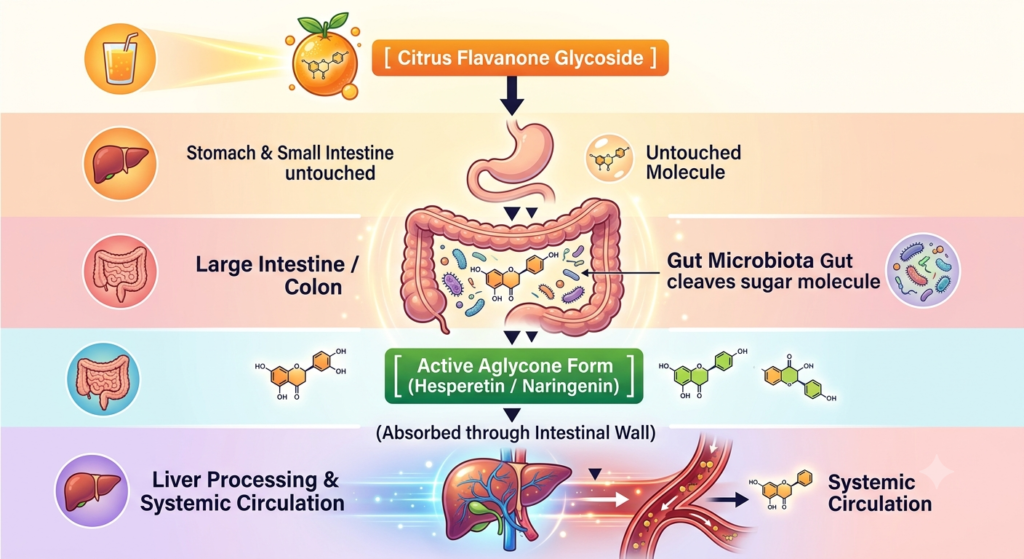
When you drink orange juice or eat a grapefruit, the flavanones enter your stomach as large glycoside molecules (bound to sugars).
- The Upper GI Tract: These large molecules cannot be absorbed in the stomach or small intestine. They pass straight through completely intact.
- The Colon Ecosystem: Once they arrive in the large intestine, they encounter the gut microbiota. Specialized bacteria possessing specific enzymes (such as $\alpha$-L-rhamnosidase and $\beta$-glucosidase) cleave off the sugar molecule.
- The Aglycone Metamorphosis: This frees the polyphenol into its fat-soluble aglycone form (hesperetin or naringenin), allowing it to be absorbed across the intestinal wall.
- Hepatic Modification: Once absorbed, these compounds travel via the portal vein to the liver, where they undergo glucuronidation and sulfation before finally entering general systemic circulation to exert their anti-inflammatory actions.
The Microbiome Dependency
This pathway highlights a crucial reality: the anti-inflammatory efficacy of citrus polyphenols is fundamentally dependent on the health and diversity of your gut microbiome. If an individual has a disrupted microbiome due to a poor diet, chronic stress, or recent antibiotic use, they may lack the specific bacterial strains required to break down citrus glycosides. Consequently, the polyphenols pass through the body unabsorbed, drastically reducing their clinical benefits.
Comparative Profile of Primary Citrus Polyphenols
To help visualize how different citrus options stack up, the following table breaks down the primary sources, biological targets, and key clinical focus areas of these key plant compounds:
| Polyphenol Compound | Primary Citrus Sources | Major Molecular Targets | Primary Clinical Focus Areas |
| Hesperidin / Hesperetin | Sweet Oranges, Mandarins, Blood Oranges | NF-$\kappa$B, IKK, VCAM-1, p38 MAPK | Endothelial function, postprandial inflammation, metabolic syndrome |
| Naringin / Naringen | Grapefruit, Pummelos, Bitter Orange | AMPK activation, TLR-4 suppression, iNOS | Visceral fat inflammation, lipid metabolism, insulin sensitivity |
| Eriocitrin / Eriodictyol | Lemons, Limes | Direct ROS Scavenging, Keap1/Nrf2 | Acute oxidative stress, cellular longevity, capillary health |
| Nobiletin / Tangeretin | Tangerine Rinds, Peel Extracts | JNK pathway, Microglial inhibition, COX-2 | Neuroinflammation, cognitive health, advanced joint protection |
Practical Application: How to Maximize Citrus Polyphenols Daily
If you want to leverage citrus polyphenols to lower your systemic inflammation markers, standard consumer habits might not be enough. Most people consume citrus by drinking highly filtered, pasteurized juices or by eating the occasional naked orange segment, leaving the most valuable parts of the fruit behind.
Here is how to optimize your daily intake for genuine therapeutic effect:
1. Embrace the Pith
The white, stringy layer between the colorful outer peel and the juicy flesh of the fruit is called the albedo. Most people meticulously peel this off and discard it because it is slightly bitter. However, the albedo is where hesperidin and naringin are most concentrated. When peeling an orange or tangerine, intentionally leave as much of that white pith intact as possible and consume it along with the fruit.
2. Upgrade Your Juice Strategy
If you choose to drink your citrus, avoid clear, highly processed, filtered juices. Opt instead for 100% whole-fruit cloudy or pulpy juices. The cloudiness and pulp are structural components of the fruit’s membranes, meaning pulpy juices contain up to four to five times more hesperidin than clarified versions.
A Note on Sugar: While 100% fruit juice provides a high concentration of polyphenols, it also delivers a concentrated dose of naturally occurring fructose. To avoid blood sugar spikes that can trigger inflammation, cap your intake at 4 to 6 ounces daily, and always consume it alongside a meal containing healthy fats and protein to slow down absorption.
3. Harness the Rind via Zesting
The volatile oils and polymethoxyflavones (PMFs) reside almost exclusively within the outer flavedo (the colored rind). You can easily integrate these highly potent molecules into your diet by thoroughly washing organic lemons, limes, or oranges and zesting the skins over salads, smoothies, oatmeal, or roasted vegetables.
4. Consider Targeted Supplementation
For individuals dealing with established chronic inflammatory conditions (such as advanced metabolic syndrome or severe joint discomfort), dietary intake alone may not provide the necessary concentration of active compounds. In these scenarios, standardized citrus bioflavonoid extracts can be highly beneficial.
- Look for supplements standardized to contain specific concentrations of 2S-hesperidin or naringenin.
- Clinical trials demonstrating systemic anti-inflammatory benefits typically utilize dosages ranging from 500mg to 1,000mg of active citrus flavanones per day.
- Always pair these supplements with a fiber-rich pre-biotic diet to ensure your gut microbiota is primed to maximize their absorption.
Critical Safety Considerations and Drug Interactions
While citrus polyphenols are exceptionally safe and non-toxic when consumed as part of a balanced diet, certain varieties carry a major caveat when consumed in concentrated or supplemental amounts.
The Grapefruit Effect (CYP3A4 Inhibition)
Grapefruit (Citrus paradisi) contains high concentrations of a group of polyphenols and furanocoumarins, specifically naringin and bergamottin. These compounds are potent inhibitors of a critical enzyme system in the human liver and small intestine known as Cytochrome P450 3A4 (CYP3A4).
The CYP3A4 enzyme is responsible for metabolizing nearly 50% of all conventional pharmaceutical medications. When you consume grapefruit or high-dose naringin supplements, this enzyme is temporarily deactivated. If you take a medication that relies on CYP3A4 for breakdown while this enzyme is turned off, the medication will bypass normal clearance and build up to dangerously high levels in your bloodstream.
Medications that carry strict warnings against co-consumption with grapefruit include:
- Statins (e.g., Atorvastatin, Simvastatin)
- Calcium Channel Blockers used for high blood pressure (e.g., Amlodipine, Nifedipine)
- Immunosuppressants (e.g., Cyclosporine)
- Certain Anti-anxiety Medications (e.g., Buspirone)
If you are currently taking any prescription medications, it is vital to consult with your physician or a clinical pharmacist before increasing your grapefruit intake or introducing high-dose citrus polyphenol supplements into your daily routine. Sweet oranges, lemons, and limes generally do not present this severe risk, making them safer choices for individuals on complex medication regimens.
Conclusion: A Multi-Targeted Foundation for Longevity
The human body is an incredibly complex network of intersecting biological systems. When systemic inflammation takes hold, it isn’t the result of a single broken switch, but rather a generalized breakdown across multiple cellular pathways.
Because of this complexity, single-target pharmaceutical interventions often come with unwanted secondary side effects. This is where the true beauty of natural nutrition shines. Citrus fruit polyphenols are multi-targeted interventions by nature. They gently modulate the upstream master switches (NF-$\kappa$B), suppress destructive enzymes (COX-2, iNOS), activate the body’s internal antioxidant armor (Nrf2), and optimize metabolic pathways via AMPK.
While eating a single orange or enjoying a glass of fresh lemon water will not instantly reverse decades of systemic inflammation, the compound effect of these small habits is profound. By consistently feeding your body—and your gut microbiome—these specialized flavanones, you provide your cells with the raw materials and signaling guidance they need to gradually cool the internal fire, protect your vascular system, preserve your cognitive reserve, and foster long-term vitality.